Unknown's avatar

About Phil @foodfrankly

I love to eat and I love to cook. Always on the look out for new dishes and ingredients which isn't always compatible with a young family, but that won't stop me trying....

Helen’s Florentines

Sorry it’s taken a while to getting round to posting this, but I wanted to put Helen’s Florentines on here. They always taste great, and that’s coming from someone who does’t have a particularly sweet tooth. For some reason they always remind me of Christmas, I don’t know why particularly, maybe it’s the colours of the glacé fruits she uses.

They were made as a ‘secret Santa’ gift and from what I gather they were well received, and rightly so as I love them. So I present, via Nigella’s Domestic Goddess cookbook, Helen’s Florentines:

Florentines

Ingredients:

  • 100g sliced almonds
  • 150g mixed glaced fruit and candied peel, chopped
  • 25g butter (unsalted)
  • 90g brown sugar
  • 15g plain flour
  • 150ml double cream
  • 200g belgian milk chocolate (to dip in)

Get the oven on and set it to180°C/350°F/Gask 5.

Start by melting the sugar and butter together in a pan and then mix in the flour to make a ball, it should be very smooth so mix it well. Add the double cream and again, mix well to remove any lumps.

Mix in the fruit and nuts and stir to combine it all.

Line a baking tray or two (depending on how big it is) with greaseproof paper or silicon sheets. Spoon a tablespoon full of the mixture onto the paper – don’t worry about it forming a ‘mound’ it will melt and spread in the oven. Add another far enough away from the first bearing in mind it will spread out. Repeat using all the mixture up.
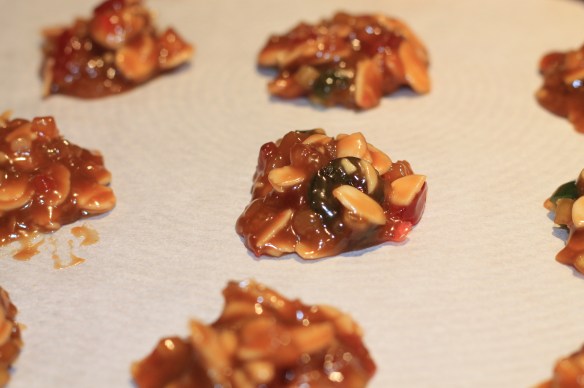
Florentines before baking

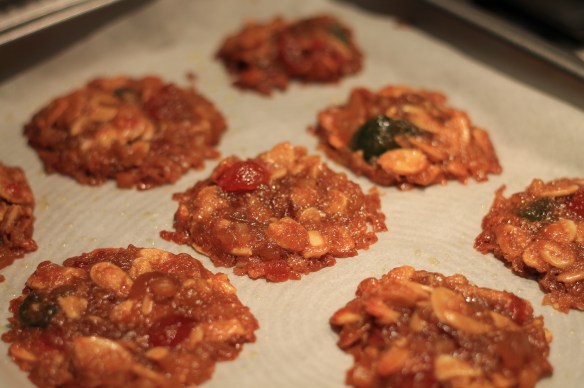
Bake in the oven for about 10 minutes, until the edges begin to brown.

Remove from the oven and leave to cool thoroughly, on a rack preferably  (but leave them to cool on the baking tray slightly first or they be to difficult to move). Whilst cooling, put the kettle on to boil some water….

Melt the chocolate by either a) melting it in a glass bowl sat over (not touching) a pan of simmering water, or b) microwaving it gently.

Helen only covers half of the Florentine in chocolate as it’s easier to hold that way and you don’t end up with it on your fingers – just either dip it in the chocolate or paint it on using the back of a spoon or pastry brush.

Leave them to cool on a rack again.
IMG_5183

Sprout Croquettes

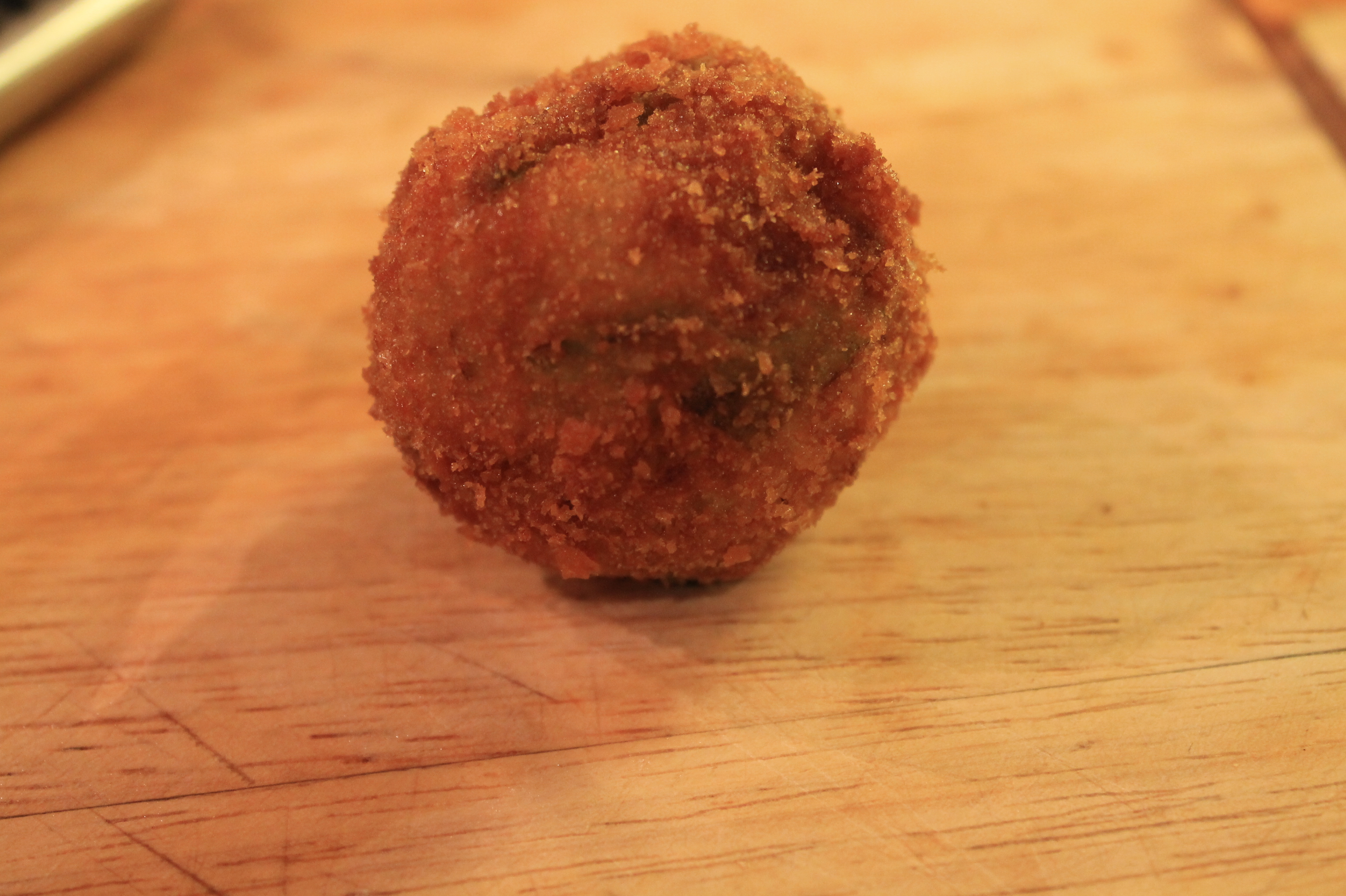
Sprout croquette

I must admit, and maybe it comes as no surprise considering I write a food blog, I’ll eat pretty much anything. Except tinned tuna of course; quite how anyone can is beyond me. Other than that though, pretty much anything.

Sprouts are pretty close to dropping off that list mind you and sit somewhere in the ‘tolerable’ category for me. Maybe it’s a childhood thing, or the fact they taste how they smell, a pungent cabbagey flavour. I love cabbage mind you, so I suppose I’m actually none the wiser.

Anyway, with Christmas day rapidly approaching, I thought I’d look at a few alternative methods of cooking them. Stir-frying them with bacon and/or chestnuts was the alternative last year and worked well enough, but then it hit me.

Deep frying, the last resort of the health conscious – surely this is a method that cant fail? It got me thinking and I came up with a kind of croquette. I quickly Googled the idea, and found I was far from the only one who’d come up with this sadly, but still. The beauty of this of course is that you can add flavours however you fancy. I added some potato to keep the thing bound together and the result was very good indeed. The offensive vegetable was mellowed and I actually found myself eating two or three of these. So, I though I’d share it with you.

To save time on the day, I think I might make the potato mixture the day before and cover it. It’ll just be case of skipping to the end then…

Makes 4 golf ball sized croquettes, just multiply them up as many as you need.

Ingredients:

  • 6 sprouts, thinly sliced.
  • 1 medium potato (any mashing variety), quartered.
  • 2 pieces of streaky bacon, chopped – leave it out for a vegetarian version, or replace with goats cheese.
  • A couple of springs of thyme, leaves only
  • Salt and Pepper
  • Breadcrumbs
  • One egg, beaten

Simply peel, quarter and boil the potato until cooked in a small pan. Strain it out of the water with a slotted spoon, roughly mash and set aside.

Blanch the sliced sprouts in the same water for a few minutes until softened. Don’t overdo it or they’ll be too soggy.

In a small frying pan, quickly cook the bacon, if using. It’ll only take a minute or two.

Mix the potato, sprouts, bacon (or goats cheese), a little salt, pepper, thyme and allow to cool. If this is for the next day, cover and put in the fridge at this point.

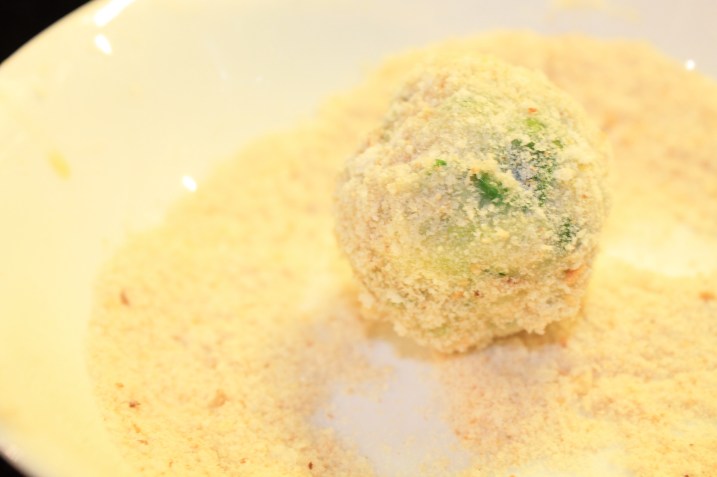
Sprout croquette

To prepare to fry them, heat the deep fryer, or just use the frying pan with plenty of oil. Whilst heating, crack the egg into a bowl and beat thoroughly. In a second bowl, pour in the breadcrumbs.

Roll and shape the mixture into golfball sized pieces. Cover in the egg, removing any excess, then roll in the breadcrumbs until well covered.

Fry gently at about 150°C or 300°F for a few minutes until nicely brown. They can keep in the oven until you’re ready to plate up, but try and do them at the end of cooking to stop them going soft. Enjoyable sprouts – a minor miracle!

Slow Braised Thai Pork

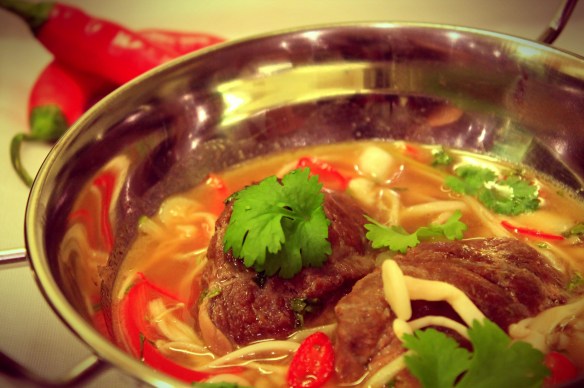
Braised pork thai broth

And so here it is, the last week of work ahead of Christmas. Helen is busy away in the kitchen making Florentines (more on that tomorrow…) and so I thought I’d post this dish I made a little earlier in the week.

The idea for this came from a comment I made a few weeks back with a fellow blogger and was itself inspired by a dish I once had. A couple of years ago, on a trip to Vegas, we threw caution, and a sizeable wad of cash to the wind and tried Joel Robuchon’s restaurant ‘Robuchon’ in the MGM. It was the one and (most likely) only time I’ve tried a 3 Michelin starred restaurant and with it being in the same hotel as we were staying, and my birthday, couldn’t pass up the opportunity. Luckily, I did OK at Blackjack that week. Phew.

I’ll be honest, I felt a little fraudulent eating there, especially with the man himself sat at the table behind us. The service though. Wow. We were held up on arrival as our table was still occupied. It wasn’t a problem, we were just enjoying ‘being there’ and having a drink in the lounge area, but they comped us his signature dish by means of an apology regardless. A lobster ravioli in foie gras sauce by the way, and it was amazing.

Anyway highlight for me was a dish of far more modest means – a slow braised beef cheeks in a thai broth. The flavours were fantastic and so strong. I’m suprised it took me so long to get round to attempting to recreate it. I couldn’t get beef, so I used pork cheeks and by poaching it in a thai flavoured stock for a few hours, it becomes beautifully tender and full of flavour. I added some enoki mushrooms and red peppers at the end to make it a bit more substantial and served it up with plain Jasmine rice.

I must admit, whilst I doubt it came anywhere near the dish I had that evening, I was very pleased with the outcome and will be definitely doing it again.

Serves 2. Takes – all day if you can!

Ingredients:

To poach:

  • 400g pork cheeks (about 4 large pieces)
  • 1 tbsp oil
  • 1 inch by 1 inch piece of ginger, sliced
  • 1 red chilli, finely chopped
  • 4 garlic cloves, thinly sliced
  • 4 shallots, thinly sliced
  • 1 litre chicken stock.
  • 2 tbsp fish sauce
  • 1 tbsp tamarind paste
  • Juice of 1 lime
  • 2 pieces of lemongrass – bashed with a rolling pin
  • 2 tbsp soft brown sugar (I didn’t have any palm sugar 😦 )

To finish:

  • two handfuls of enoki mushrooms
  • 1 red pepper finely sliced
  • 1 large handful of coriander finely chopped, stalks and leaves
  • 3 or 4 basil leaves, shredded.

Heat the oven to 130°C (fan), gas mark 1

Take a large casserole pot and start by well browning the pork in the oil on the hob. Add the chilli and garlic for a few minutes then the stock. Deglaze the pan and bring to a gentle simmer. Add the rest of the ingredients, stir well, put the lid on the pot and slow braise for 4 hours.

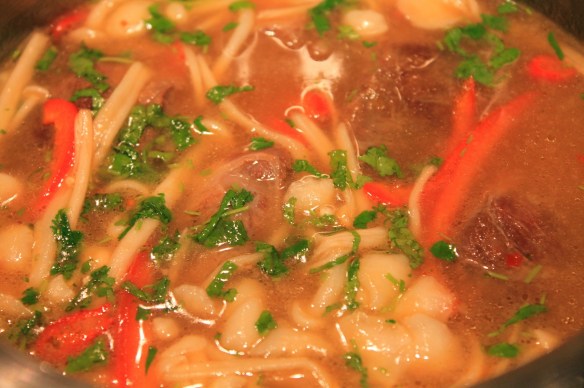
After that time, it should be amazingly tender and the stock reduced to concentrate the flavours. Strain the stock through a fine sieve, and again through a muslin cloth if you have one (but not essential). Return the pork to the pan with the stock, add the mushrooms and peppers and gently heat for a couple of minutes so as not to overcook the vegetables. Just before you serve it, stir in the coriander.

thai broth close up

Falafel and Tahini Sauce

Hi everyone. I promise I’m trying hard to get in the festive spirit at the moment, but rather than winding down for Christmas, my day job seems to be winding up!

I was hoping to post some more festive recipes and findings this week, but I’ll leave that until next. In the meantime, I decided to make some distinctly cheery falafel.

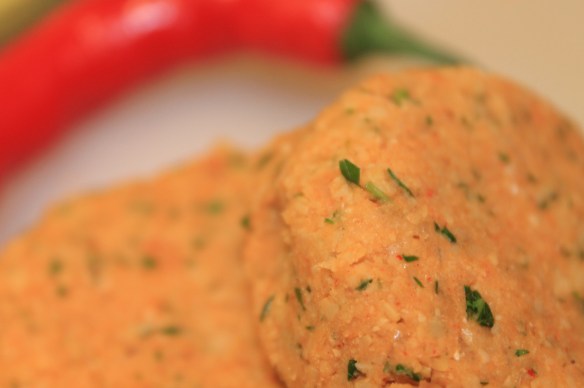
A staple in the middle east, it’s quick, easy, filling, tasty and yet healthy, a bit of a Holy Grail then. It can be as mild or spicy as you like, I like it hot, Helen likes it mild, so I made it somewhere in the middle!

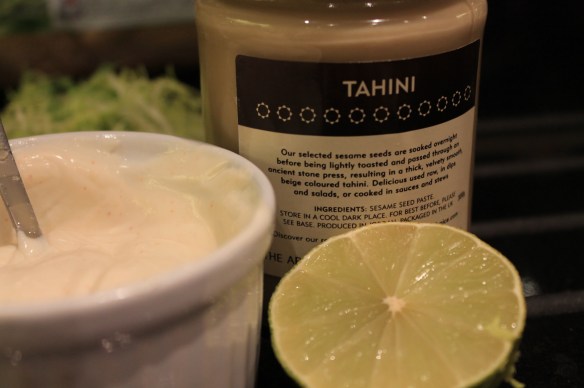
I managed to get some tahini paste in town the other week (a mixture of crushed sesame seed and oil) to make a simple tahini sauce recipe that I shamelessly ‘borrowed’ from BBC Goodfood’s website. It was the first time I tried and it and it’s delicious, a really nice background flavour that I think would work in a whole range of dinners.

Falafel

Ingredients:

Falafel:

  • 400g chickpeas, or 200g dried.
  • 1 handful of parsley
  • 1 tsp ground coriander
  • 1 tsp ground cumin
  • 1 tsp sweet paprika
  • 1/2 tsp chilli powder
  • 1-2 tbsp oil
  • 1 handful of breadcrumbs
  • 1/2 and onion roughly chopped
  • Oil for frying

If using whole coriander and/or cumin seeds, dry roast them first in a frying pan and pound to a powder in a pestle and mortar. If using dried chickpeas, soak overnight and simmer beforehand for about 45 mins – 1 hour until cooked. Let them go cold.

To make the falafel, simply – chuck everything into a food processor and blitz until a smooth but thick (shapeable) paste.

Divide the mixture evenly, either lots of small falafels, or a few larger ones as you prefer. Roll then into balls and flatten slightly. Preferably then leave in the fridge for about 30 minutes to firm up, but I often just get them straight in the pan…

Heat a pan big enough to hold the falafel without being too big (or you’ll need too much oil) and fry on both sides until crispy and brown. About 5 minutes in total should do it.

In the meantime, you can make the sauce by mixing 5 tbsp of yoghurt with a heaped tsp of tahini, a good pinch of salt, chilli powder and juice of half a lime. Taste it and adjust it as you see fit.

That’s it! Simply serve it up on flat bread or pittas. We made our own bread (from 50g white/50g brown flour, 60 ml water, pich of salt, halved and rolled thinly and cooked on a hot cast iron pan), but for speed I often use shop-bought.

Tahini Sauce

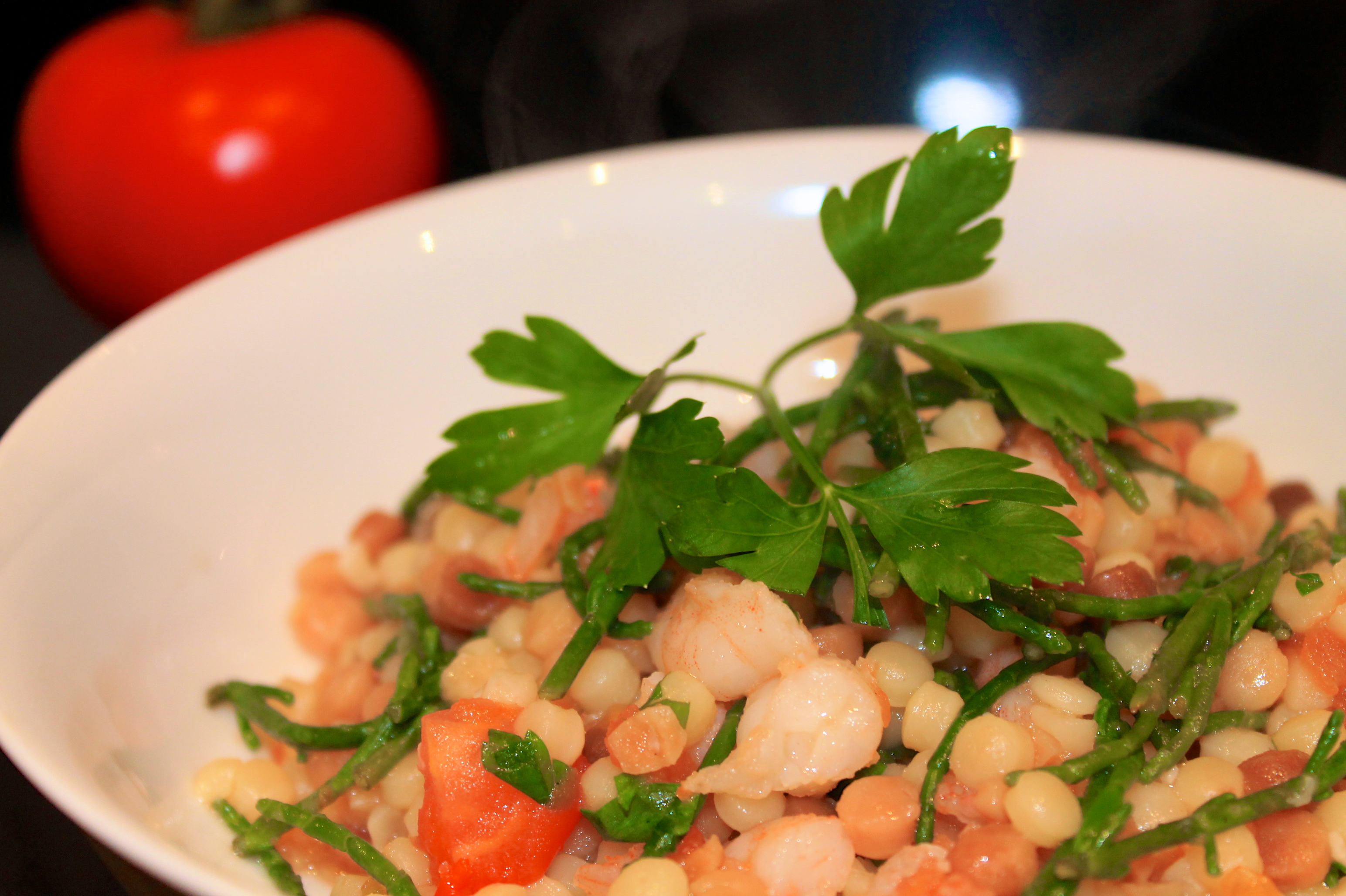
Fegola with samphire, chilli and prawns

fregula samphire prawns

There’s an Italian restaurant in Newcastle called Panis Cafe; a no fuss, typically loud, always busy cafe style place near the Theatre Royal (for those that know the city). It’s one of my all time favourites, with consistently good and authentic Southern Italian dishes. I would just mention as well that the service is the fastest I’ve ever experienced, with a plate of food arriving literally minutes after ordering even when at it’s fullest. I guess years of catering for theatre goers will do that though.

It was here I first tried fregola (or fregula? – they spell it both ways on their menu). They’re small pieces of semolina pasta from Sardinia which have been toasted so they have a distinctive nutty taste. It took me a while to find it in shops but a small independent deli, appropriately named mmm sells it in a local market.

After trying a few variations, I personally think it’s best served as Panis do, with a light wine sauce with seafood, but I also used it in soups and it works well.

This was another spur of the moment type dinners. We went to see the Black Keys play last night and so needed something fast before we set off. I had some samphire in the fridge which is fairly commonly (and cheaply) available theses days and is delicious. It’s a coastal plant and therefore has a robust and salty flavour which is great with seafood, naturally.

This serves 4 and is ready as soon as the pasta is cooked, so about 15mins.

Ingredients:

  • 300g Fregola/Fregula pasta
  • 1 tbsp sea salt for the pasta water
  • Optional – vegetable bouillon powder – but make sure you add less salt to the pasta water
  • 200g large prawns roughly chopped
  • 2 tbsp olive oil
  • Quality Extra Virgin olive oil (to finish)
  • 1 large clove garlic, finely chopped
  • 1 green chilli, finely chopped
  • 2-3 good handfuls of samphire about 150g
  • 2 large tomatoes (preferably skinned), diced
  • 1 large glass of white wine
  • 1 tbsp chopped flat leaf parsley
  • 1 knob of butter (optional)
  • 1 green chilli, finely chopped
  • Black pepper

Start by getting the kettle on for the hot water (I promise I did this before reading Jamies’ 15 minute meals!!)

Whilst that’s happening, prepare all the ingredients and leave to one side on a board ready to use as it all happens quickly one the pasta is in.

Put the pasta in a large pan with the salt and stock powered if using. I’m not sure it’s authentic, but I think it adds a nice flavour! There is salt in the stock though, so adjust the amount extra you add.

Pour over the water and bring to a rapid boil. It’ll take about 10 minutes, so time to get on…

Add the olive oil to a small frying pan, heat gently and fry off the garlic and chilli for a minute with a good pinch of salt. Stir in the prawns and briefly colour followed by the wine and the tomatoes. Scatter the samphire on the top and leave to reduce for 3 or 4 minutes. The heat/steam will help cook the samphire without over doing it.

Check the fregola, it should be nearly done, without being over done. You can now finish this one of two ways!

1. Drain the fregola (reserving some of the pasta water) whilst slightly underdone, and return it to the pan with the sauce and a few table spoons of pasta water. Heat gently with the lid on to finish cooking. Stir in the butter once done.

OR

2. Once it’s ready (try it), drain it, keeping a little of the pasta water in case you need it.

Put the cooked & drained pasta back in its pan, stir in the butter if using followed by the sauce and mix thoroughly. Add a little of the pasta water if its too dry.

Either way, finish by stirring in the chopped parsley and a little ground black pepper and plate it up in pasta bowls. Drizzle over the extra virgin olive oil to taste.

I like to add a little parmesan and mop it up with some good bread too. Love it.


Goats cheese and Walnut Salad

There’s been a distinct lack of blog updates recently I admit and for the most part that’s been due to a fair bit of eating out. More on this later actually…..

And so, having eaten far too much rich food over the last week or so, this week, or what remains of it will focus on ‘lighter’ food. Tonight I made a goats cheese and walnut salad, with pear and a honey dressing. I’d had this classic combination a number of times, but the best was during a meal in an almost desserted Clube de Jornalistas in Lisbon where we sat outside in an amazing rear courtyard. I think the fact a thunderstorm had only just petered out had something to do with the lack of patrons.  Maybe only the Brits and our reluctant ability  to endure the rain were able to venture out that night!

This isn’t a complicated dish and therefore depends in part on the quality of the ingredients, particularly the goats cheese which should be smooth with a ‘saltiness’, rather than the the acidic supermarket approximations. I think next time it would benefit from some sweet cured bacon pieces, but nevertheless we both enjoyed this.

Serves 2, takes 10 minutes tops.

Ingredients:

  • Two large handfuls of Frisee lettuce, washed and dried
  • 4 walnuts, chopped roughly
  • 200g goats cheese, the best quality you can get/afford
  • 1 pear, peeled and thinly sliced

For the dressing:

  • 1 tbsp honey
  • 1 tsp wholegrain mustard
  • 1 tbsp oil (I used garlic infused rapeseed oil)
  • 1 tbsp white wine vinegar
  • Salt (a good pinch) and Pepper to taste

Simply arrange a layer of frisee lettice on each plate and add  some of the goats cheese. Pile the remaining frisee on followed by the remaining cheese and walnuts.

Mix up the dressing ingrdients thoroughly. Peel and slice the pear thinly and layer on top of the salad.

Finally, use a teaspoon and drizzle the dressing over both salads.

Simple as that!

IMG_4988

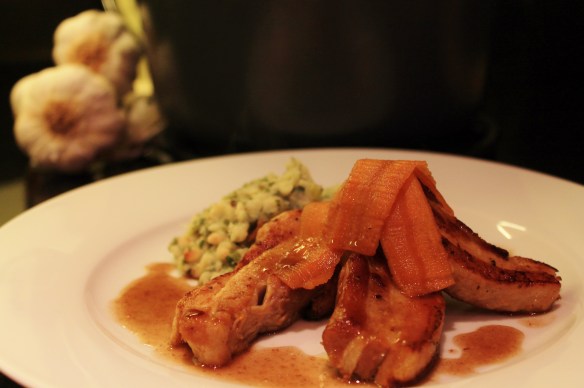
Slow Braised Pork, Bean Puree & Pickled Carrots

It’s Friday evening and that means trying something a little different. Tonight, as we’d not been to the shops for a while, the recipe was inspired somewhat by what I knew we had left in the fridge.

Technically then, not so much inspiration as adaptation, but I unwittingly came up with something we both actually really enjoyed, especially Helen who has spent most of the day ill in bed!

The belly pork needs to be braised for a good while, I did this for 4 hours (using the ‘on-timer’ I have on my oven). I braised it very simply in chicken stock and was virtually falling apart by the time I got back from work. I actually first tried something like this at a local pub who do a version braised in Chinese spices which was also very good, but I wanted something ‘lighter’.

The bean puree was made with butter beans as I had them in the cupboard, but Canellini or Haricot beans would be fine. I had some mixed spinach, watercress and rocket leaves, which I blitzed with it too and added a nice peppery lift. The pickled carrots were based on the pickled mushrooms from the post I made a week ago – it worked well and compliments the richness of the rest of the meal very nicely.

I finished the whole thing off with a reduction made from the pork cooking stock and port.

Serves 2. Takes about 1 hour to make, but needs 4 hours braising time.

Ingredients:

Pork:

  • 500g belly pork, not too fatty for this dish.
  • 500ml chicken stock
  • 3 sage leaves

Butter bean and leaves puree:

  • 1 tin butter beans (or 200g dried, soaked and simmered for 40 mins)
  • 3 good handfuls of mixed green leaves – I had spinach, rocket and watercress.
  • 2 tbsp grated parmesan
  • Salt and Pepper
  • Tbsp toasted pine nuts
  • A little vegetable bouillon stock.
  • Small knob of butter

For the carrots:

  • 1 large or two small carrots, thinly shaved (use a potato peeler to get the right thickness!)
  • 1 tbsp balsamic vinegar
  • 1 tbsp white wine vinegar
  • 1 tbsp sugar
  • 1 tsp salt
  • 1 star anise (optional)

For the port reduction:

  • About 200ml of the pork cooking stock, fat skimmed from the top
  • 2 tbsp port
  • Small knob of butter to finish

Method:

Make up some chicken stock if you don’t have any. Arrange the belly pork tightly in a roasting tin (not too big – so it covers the bottom) pour over the stock, sage leaves and salt & pepper. Seal with cooking foil and braise for about 4 hours at 140°C (fan) or Gas 1.

Remove the pork and set aside. Pour the fat from the top of the cooking liquor and strain it through a sieve (or muslin cloth) into a bowl for later.

Drain the beans, if using tinned, and place in a pan, cover with stock and simmer until heated through. Place the mixed leaves on top and allow to wilt down in the heat. Pour out the stock (and reserve in case you need it) and put the contents in a food processor or, if you’re feeling old-school, a pestle and mortar in batches. Blitz or pound until you get a puree. I left a few lumps in as I prefer it that way. You may need to add some of the reserved stock if it’s too dry.

Put it back in the pan and stir in the Parmesan, pine nuts and the butter and warm gently, reducing slightly if it’s too ‘wet’. Turn the heat off and cover until needed.

To make the pickled carrots, simply peel then shave them using a potato peeler, or use a very sharp knife to get thin strips. Put in a small pan with all the other ingredients and bring to a gentle simmer for a few minutes. Taste the liquor and adjust it as you see fit, but this worked for me.

Get a heavy frying pan and add a little oil. Get it hot and colour the braised belly pork on each side, it smells amazing. Remove and wrap in foil to rest/keep warm. Add about 200ml of the reserved pork cooking stock and the port to the pan and reduce on a medium heat for a while. When thickened, take it off the heat and whisk in a knob of butter.

Plate it all up and enjoy. Another long one, but well worth it!

IMG_4948

Kung Pao Prawns

Well, the UK has been pretty miserable the last week or so and even though we’ve seen the sun today (at least I think that what it was from memory), the weather is now coming from the North and therefore it’s freezing out there. I don’t think there’s been a worse year for weather has there? Ah, yes, last year…..

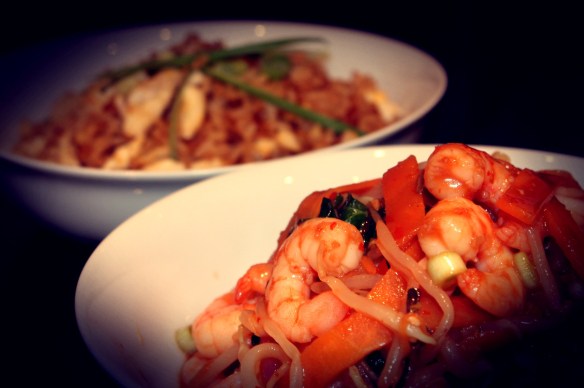
To cheer us up I decided to try something else oriental (in origin at least) with a bit of spice and came across Kung Pao Chicken. Another slightly Westernised dish, I got the general gist of the ingredients and put this together accordingly, but using prawns instead of chicken.  I don’t normally choose this sort of Chinese/Cantonese food, preferring really savoury dishes with black beans, or oyster sauces, that sort of thing, but I was pleased with this. I love the weird mouth tingling effect of the Sichuan pepper corns too.

I made this with a quick egg fried rice. The one issue with this is that you need to pre-prepare the rice and allow it to completely cool first, preferably in the fridge. So, and I make no secret of it, I keep a couple of those pre-cooked packets of plain rice kicking around in the cupboard for when I haven’t planned ahead or get in late. They’re generally a bit overcooked when eaten alone, but work fine in stir fried dishes like this or a Biryani. Anyway…

Ingredients:

  • 1 tbsp groundnut oil (2 is better, but I’m keeping it to a minimum)
  • 1 tsp ground Sichuan pepper corns (use a pestle and mortar, or bash under some cling film).
  • 200g large raw prawns
  • 1 garlic clove
  • 1 thumb sized piece of ginger
  • 1 medium chilli, sliced. Take the seeds out to lower the heat if you prefer!
  • I carrot thinly sliced lengthways
  • 1 handful of bean spouts
  • 1 small onion sliced
  • 1 small red pepper and 1 small green pepper, chopped
  • a handful of shredded cabbage
  • handful of cashews, crushed
  • 1 tbsp. oyster sauce
  • 2 tbsp. sweet chilli sauce
  • A dash of rice wine (or dry sherry)
  • 2 spring onions/scallions finely sliced
  • Soy sauce and white pepper to taste.

For Egg Fried Rice:

  • 250g pre-cook rice or cooked and cooled (overnight in the fridge)
  • 1 egg, whisked
  • 1 tbsp soy sauce
  • Few drops of sesame oil (optional)

Method:

Put the oil into the wok and get the heat on high until it’s smoking.

Add the ground Sichuan pepper and fry for a minute.  Put in the onions and soften, followed by the ginger, chilli and garlic (careful not to burn it). Pour in a dash of rice wine/sherry about a tsp of soy sauce and reduce a little. Add the prawns and when nearly cooked (only a couple of minutes), put the vegetables in. Keep stirring for a minute or two more then add the sweet chilli sauce and oyster sauce to warm through.

Take it off the heat and fold in the crushed cashews, spring onion and a pinch of white pepper. Taste it and add a little more soy sauce if you think it needs it. Place in a bowl, cover and keep warm.

Clean the wok out, add another tbsp of oil and get it super-hot again. Break the rice up and quickly stir fry it for about 5 minutes, pouring in the soy sauce after half the time. Finally, pushing the rice to the edges, make a well in the bottom. Pour in the egg, (so that it is in contact with the wok not the rice) and stir in the middle until cooked and slightly crisp, combining it with the rice once only set, otherwise it will just turn the rice soggy. Add a few drops of sesame oil if using, and it’s done.

That’s it, fast and delicious.

Linguine with Peas Pancetta and Pangriata

It dawned on me today that despite it being my favourite cuisine out there, I’ve yet to post anything to do with Italian food. Mama mia…..

I think it may be to do with the fact that Italian food, particularly pasta, has become almost the ‘norm’ in this house and therefore I didn’t think it worthy of broadcasting to you all. A schoolboy error!

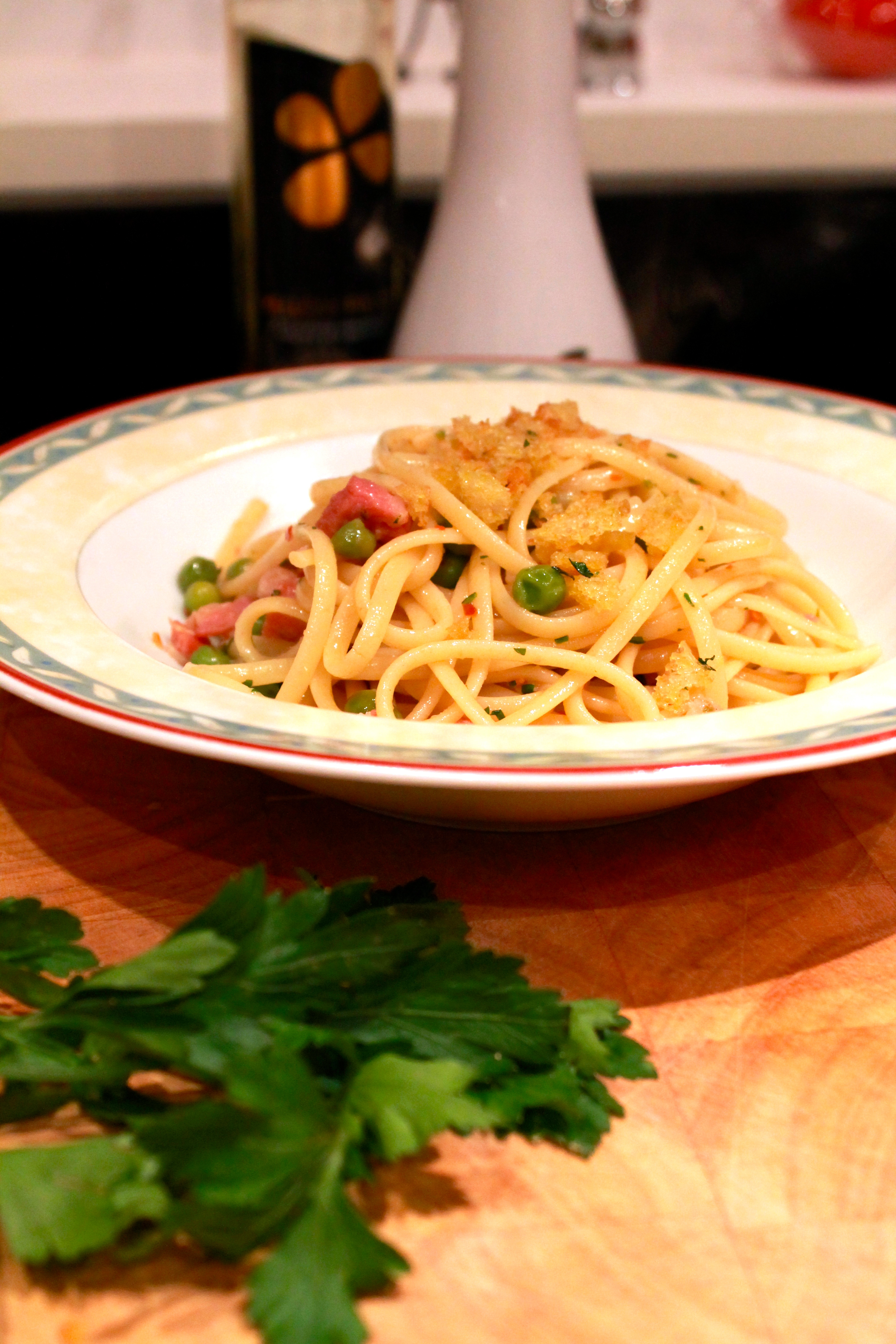
I love a good tomato sauce as much as the next frustrated chef, but I prefer pasta like this, simply but robustly flavoured. I’ve combined some pancetta cubes with sweet garden peas, chilli, lemon, fresh parsley and a background umami boost of anchovy fillets. You can leave the latter out of course as I admit they are a bit of a love me/hate me ingredient.

Pangriata is another example of the Italians making something delicious from something ordinary. Seemingly a replacement for the more expensive Parmesan (or is that an urban myth?), I prefer it in many ways for the crunchy texture. It can be tweaked and flavoured to suit the dish, but here I made it simply using a garlic infused oil and parsley. If you don’t have any, regular olive oil with finely chopped garlic and your choice of herbs is the default route for making this.

The recipes here is for two people, but can be easily multiplied up for more servings.

Serves 2. Prep and cooking time – 20 minutes.

Ingredients:

  • 150g linguine
  • 2 tbsp cooking olive oil
  • Extra virgin olive oil (to finish)
  • 100g frozen peas
  • 100g diced pancetta (or lardons/chopped streak bacon)
  • 4 anchovy fillets
  • small glass of white wine of white wine (optional)
  • 1 tsp flaked dried chilli
  • Zest of a lemon
  • 1 tbsp chopped parsley
  • Ground black pepper to serve if preferred.
  • Salt

For the pangriata (depending on how much you prefer)

  • 1- 2 handfuls of roughly chopped breadcrumbs
  • 1 – 2 tbsp Garlic infused rapeseed oil (or the same amount of oil fried with a finely chopped garlic clove)
  • Chopped parsley or thyme
  • sea salt

Method:

Get all the ingredients ready, including any chopping slicing or dicing you need to do.

Fill and boil the kettle.

I make the pangriata near the end, with a bit of multi-tasking, but if you prefer to do one thing at a time, make the pangriata first: simply fry off the breadcrumbs in the garlic oil, a good pinch of salt and some chopped parsley or thyme. It won’t take long to be golden and crispy. Remove from the pan and set aside (preferably somewhere warm).

Next, add about a tbsp of salt to a large pot and pour over the freshly boiled water. Get the heat on until it starts to boil.

Put the peas in the pan and simmer until warmed through for no more than a minute or two, they’ll be cooked further later. Remove with a slotted spoon and keep to one side in a bowl. You can do this in a separate pan of course, but it saves on washing up!

Turn the heat up to get the water to a fast boil and add the pasta. It will take about 11 minutes so time to get moving with the rest.

In the same frying pan you made the pangriara, add 1 tsbp of regular olive oil (not the good stuff, it’s a waste as you won’t taste it) and fry the pancetta, flaked chilli and garlic briskly until well coloured – about 2 minutes – on a high heat. Add the anchovies and mix thoroughly, they will dissolve into the pancetta.

Add the white wine and peas and reduce for a minute or two.

Add a few tablespoons of the pasta water to the sauce to loosen it up. Taste and add more seasoning if needed but it shouldn’t (pancetta and anchovies should be more than enough). Stir in the chopped parsley and lemon zest.

Check the pasta which should be pretty much ‘al dente’ by now and ready to go. Drain, reserving a little of the pasta water, and put back in the pan. Stir in the ‘sauce’ using tongs or a spaghetti spoon to mix thoroughly. Add a little more pasta water if too dry.

Plate it up in pasta bowls, drizzle over a little extra virgin olive oil and top with the pangriata.

Pork and Apples

I apologise that this is not a particularly adventurous dish, but it’s always a winner and a quick, healthy (if you use lean meat) and inexpensive mid-week meal.

I used the last of the apples from the garden in this, using both the hob and the oven to cook them with the pork. The pork can be tricky to cook without drying out, so I’m a fan of using an oven proof frying pan to seal the meat and then finish in the oven more gently. Chops on bone or with a decent amount of fat work best as they are less prone to drying out and generally have more flavour, but I’ll leave that to you!

Serves two.

Ingredients:

  • 1 tspb oil
  • 2 pork chops
  • 1-2 small apples cored and chopped into 2cm cubes
  • 200ml Chicken stock
  • Salt and Pepper
  • 2 Sage leaves
  • Boiled new potatoes and steamed vegetables (I made broccoli and cauliflower) to serve.

Method:

Preheat the oven to 180ºC (Gas 4)

Using the base of a metal steamer, put the potatoes on to boil. I used new potatoes in skins.

Get the pan pretty hot with the oil and add the seasoned pork chops. Move them around at first.

Add the apples to let them caramelise a bit. Turn the pork chops over after a minute or two, they should be well browned by now. Place the sage leaves at the bottom of the pan and put the whole thing in the oven for 10 minutes or so. A kitchen thermometer is very handy here to check it’s cooked through without overdoing it.

Take the pork out of the oven once done and leave to rest on a plate covered with foil.

Start steaming the broccoli and cauliflower over the boiling potatoes – they’ll only take five minutes or so. Check on the potatoes first though and remove them with a slotted spoon if done already (leaving the water in the pan to steam the vegetables!)

Put the frying pan back on the hob – (being careful of the oven-hot handle!) and deglaze the pan with the stock. Let it reduce with the apples and sage for a few minutes.

Get the plates ready with the vegetables and pork. Season the apple reduction if necessary and pour over the pork. Simple and delicious with a side of mustard.

Image