Pork Cheeks, Spinach and Champ

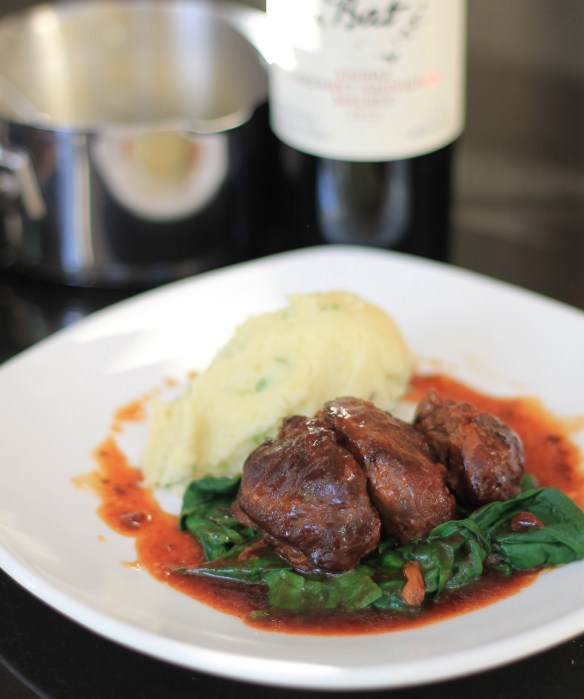
Pork Cheek, Spinach and Champ

Helen and I have a shared calendar which appears on both our phones. It makes for amusing moments when I get an alert that I have a hair appointment on Friday evening or that I have drinks with ‘the girls’ on Wednesday night…

Even with our synchronised diaries (although I should point out it’s mostly me trying to keep up with her more sociable lifestyle) I constantly get surprised.

And so, I lovingly made this dish last week, starting the cooking the night before only for my phone calendar to remind me she was having dinner with a friend that night. Worse, the venue was the sort of place with more microwaves than hob rings. Humph.

Undeterred I made this anyway and I’m glad I did, as was Helen when she returned having only eaten half her nuked dinner 😉

Pork cheeks are another one of those slow cooked, cheap-as-chips cuts that deliver massively on flavour. I really should have learned from Conor’s advice about publicising this sort of thing for economic reasons though.

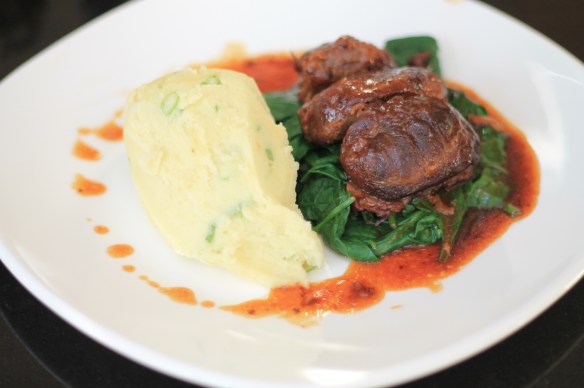
I braised the cheeks in cider and stock in a casserole pot on a low heat the previous evening and warmed them back through the day I served them. Most of the cooking liquor had concentrated up nicely and they were naturally melt-in-the-mouth tender.

Champ is an Irish recipe for mashed potato, using butter, milk and spring onions. Strangely, I’d only recently come across it and I’m glad I did. I did a little research and cobbled this together from a few sources. I hope it’s fairly authentic…

Serves 2

  • 500g pork cheeks, trimmed and sinews removed
  • 1 bottle (500ml) good dry cider
  • 250ml chicken stock
  • A medium carrot, 1 stick of celery (snap in two)  and half an onion
  • 4 garlic cloves
  • Pepper
  • A little oil
  • 4 large handfuls of spinach

For the Champ:

  • 2 large floury potatoes, peeled
  • 3 spring onions/scallions finely chopped
  • About 50ml whole milk, warmed
  • 1-2 tbsp butter
  • Salt and pepper to taste

Spring Onions

Start by frying the pork cheeks in an ovenproof pan or casserole pot until well coloured. Deglaze with a little cider and add the vegetables. Add the rest of the cider and stock and place in an oven at about 140°C/275ºF for 5 hours at least. Leave to rest overnight.

Pork Cheeks

The next day, reheat the pork cheeks on the hob. Reduce the liquor down if needed with the lid off, until the flavours concentrate – taste as you do. Strain and reserve the cooking liquid as a nice gravy and keep warm. A knob of butter stirred in at this stage is a delicious, if unhealthy addition 😉

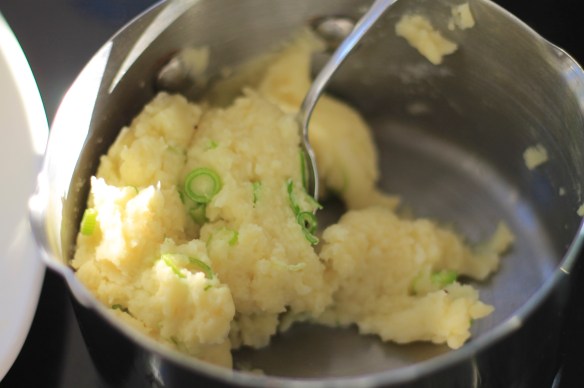
Quarter and boil the potatoes (15min). Then, drain and mash, using a potato ricer if possible, melt in the butter and then the warmed milk, until smooth but not too ‘wet’. Finally, stir in the spring onion. Season with salt and pepper to taste. Keep warm.
IMG_8366

Lastly, wilt the spinach in a large shallow pan with a little boiling water for a couple of minutes. Remove and squeeze the excess water out using a sieve and the back of a large spoon (or in your hands).

Serve it all up and enjoy.
IMG_8379

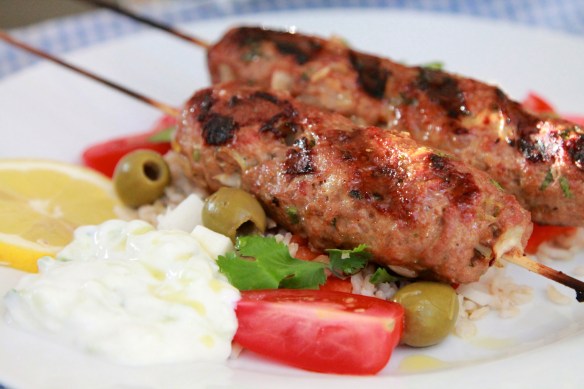
Lamb Kebabs with Greek Style Brown Rice Salad

Lamb kebabs and brown rice salad

Firstly, an apology! I’ve recently realised that email subscribers get a full copy of my posts as they are published. The problem is, time being tight as it often is, I usually publish first and make any corrections later so as it doesn’t go out too late at night. This means some rather ‘rushed’ copy goes out there initially. I’m not a very accurate typist, so I’ll bear this in mind in future *slaps wrist*.

So anyway – food. The sun’s out and the cover is off the barbecue. Happy days!

Instinctively then, I started thinking of Mediterranean type dishes of late and I was also inspired by a local sandwich shop/takeaway.

I pass this place most days coming back from work and stopped there the other afternoon as I was in the area. I got chatting to the owner who’s keen to make his menu as healthy as possible, being based around wholewheat wraps, brown rice and salad. It tasted good too and whilst I’m sure there are plenty of these places in the trendier parts of London, it is a bit unique round my way – I hope he does well.

And so having some minced lamb in the fridge, I made these kebabs with a brown rice Greek style salad and a quick Tzatziki.

The smell was great on the grill outside….

Makes 4 kebabs:

  • 500g minced lamb, no too lean or it’ll be dry
  • 2 garlic cloves, finely chopped, or 2 tsp garlic powder
  • 1 tbsp cumin powder
  • 2 tbsp chopped coriander
  • 1 tbsp chopped mint
  • 1 tbsp smoked paprika
  • 1 red chilli, finely chopped
  • Juice of half a lemon
  • 2 shallots, finely diced
  • Salt about a pinch per person (so – 4)

Just a quick tip, but I tend to mix everything, going easy on the ingredients, and fry a small bit first to taste.

For the Greek style brown rice (serves 4)

  • 200g brown rice
  • 1 small onion, thinly sliced. Red onion would have been better.
  • 1/2 a red pepper, diced
  • A handful of chopped coriander
  • 100g of goats cheese (Feta works well)
  • Juice of the other 1/2 of lemon
  • Green and/or black olives.
  • 4 good tomatoes, quartered.
  • Extra virgin olive oil

For the Tzatsiki – I used this recipe at the BBC. Nice.

Cook the brown rice first, it takes a little while longer than white rice.

Meanwhile, mix the kebab ingredients. By hand works better. Roll into sausage shapes and thread onto some wooden skewers. If using a charcoal BBQ, probably best to soak the skewers first.

IMG_8831

Cook until done and keep warm – they don’t take long with the lid on. 10 minutes or so.

IMG_8843

Finally, tip the cooked rice into a bowl and mix in all the ingredient for the salad. Serve it up with the kebabs on top, a big side of Tzatsiki and a drizzle of good extra virgin olive oil. Summer on a plate!


Lemon Sole and Triple Cooked Chips

Lemon Sole and Triple Cooked Chips

Hello.

My name is Phil and I’ve had a problem for about 8 years now (no, it’s not that).  It’s that I’m English (no, not that either) and I hate chips.

Actually… that’s not entirely true, I like chips a lot. What I mean is normally, if I’m out in a restaurant I avoid them, mainly because they’re invariably bad, but also because there’s so much more choice now out there in terms sides dishes. I feel like I’m copping-out.

Since Heston Blumenthal made his way onto our screens though, dry-icing cream, morphing meat and triple cooking his chips, I’ve noticed a bit of a renaissance. In fact ‘proper’ or ‘hand-cut’ chips are increasingly being highlighted as selling points on the typical gastro-pub menu. That’s good then I suppose but also, it isn’t, as making chips from scratch is hardly a Michelin starred pursuit in the first place. How low had we gone in culinary terms that we had to, and still do, buy them pre-made and frozen?

Of course I’m not talking about the good old British Fish ‘n’ Chip shop, keep up the good work fellas…

And so, I thought I’d give Heston’s triple cooked chips a go in pursuit of bettering my culinary knowledge. This is a shortened version as to be honest, his recipe calls for a process taking around 3 hours all in all. I don’t like chips that much….

The result was actually very good I’m pleased to say – they had a nice crunch

For this Helen managed to get hold of some freshly caught lemon sole (one of my favourites) and  I did very little to this as it doesn’t need it. To counter the oil – a nice bean salad, same as I did for the mackerel. I had a lot left….

Lemon Sole

Serves 2

  • 2 lemon sole fillets
  • flour for dusting
  • 3 or 4 Maris Piper potatoes.
  • Oil – enough for deep frying
  • Salt and Pepper
  • A side salad of your choice

Start by making the chips. Peel the potatoes and slice into 3/4 inch or 2cm square batons. Try to trim the potatoes into nice square shapes first to keep them all even sized (you can cook the off cuts – I hate waste too!) Rinse very well to remove the excess starch.

Place in a pan of cold water and bring to a boil for about 15 minutes (Heston says 20-30, but I’m not that brave). They should be soft, almost breaking, but keeping their shape.

IMG_8405 (1)

Drain and leave to cool completely by an open window on a plate in a single layer.

Make up the side salad and pour some flour onto a plate for dusting the fish later – season well.

Heat the oil to 130°C/270°F and add the cold chips. Fry gently for about 5-10 minutes, until just about cooked on the outside. Remove and again, leave to cool by the window, same as before.

Finally heat the oil to 180°C/360°F and finish the chips off until nice and golden.

Just as they go back in, dust the fish in seasoned flour and fry in a little oil, mostly on the skin side, until just done. Take out the pan and keep warm. Serve them all together, with a little extra salt and vinegar. Lovely.

IMG_8500


Smoked Mackerel and Bean Salad with Quick Hollandaise

Smoked mackerel hollandaise salad

“You don’t win friends with salad” a wise man once said. Well, not true actually it was from an episode of The Simpsons from a frighteningly long time ago. It still gets an airing at BBQs even now.

How times change though, and now I’m actually a big fan of the salad and the endless combinations possible. I’ve droned on about drab salads in an earlier post but suffice to say, unless the ingredients are very good, I generally prefer warm versions.

This fits the bill then – warm smoked mackerel and a super quick hollandaise sauce paired with some leaves and blanched beans. I think it’s healthy, but then there is a fair bit of butter in the hollandaise of course. I think, all ingredients considered therefore, I’m eating good fats/bad fats and having my cholesterol both raised and lowered simultaneously. Confusing.

The hollandaise is a great recipe I got from the Guardian’s Felicity Coates. She does a nice column where she tries a number of different recipes to find the best take on a particular dish. I must admit this was very easy – just put the cold butter and egg yolk in a pan and turn on the heat to the lowest setting whisking thoroughly all the time. Season with salt, if needed, and lemon juice at the end once it’s thickened. Simple.

I was on my own this morning, so this serves one, but it’s easily altered to suit. There was more than enough hollandaise though, so could have possibly stretched to two people.

  • 1 smoked mackerel fillet
  • 1 handful of mixed leaves
  • 2 handfuls of mixed beans – I had peas, green beans and broad beans (fava beans)
  • 1 egg, soft boiled and halved

For the hollandaise:

  • 1 egg yolk
  • 60g/2 ounces butter – I used salted
  • Fresh lemon juice and salt to taste

Grill the mackerel, cut into bite size pieces and keep warm. Soft boil an egg, peel, halve it and arrange it on a plate with the salad and beans.

You’ll need to do this first so you can concentrate on the hollandaise as it doesn’t ‘rest’ well once made.

Take a small pan and place in the egg yolk and butter. Turn the heat onto the lowest setting and use the smallest hob you have.

Keep stirring continuously, I started with a balloon whisk but changed to a small silicon spatula to get into the edges.

IMG_8510

Once it starts to thicken, turn the heat up ever so slightly and keep whisking/stirring until thickened enough. Once done, I actually dipped the bottom of the pan in cold water to stop it cooking any more.

Add about a teaspoon of lemon juice, or to taste and salt if you need it.

Put the warm mackerel on a plate and spoon over the hollandaise. Good morning!

Smoked mackerel hollandaise salad

Roast Beef and Yorkshire Puddings

Roast Beef and Yorkshire PuddingIt’s St George’s day. England’s annual day for naval gazing and chuntering on about how we should celebrate it more. Except of course, we never do because we’re English and that would never do. It’s a shame really as we’ve a lot to shout about these days.

Although I know an acquired taste, especially with our Antipodean and trans-Atlantic friends, we produce some truly excellent ales. We farm great produce and now thanks to a millennia of trade links, are welcoming of cuisines from all around Europe and the world.

Of course this is a food blog and so I’m looking at it from a very narrow angle. I felt compelled therefore to try and wave a flag in recognition and save this post until today, being a typically English dish. Maybe the typical English dish.

I’m doing nothing to dispel the French notion that we all eat Roast Beef, but it is for a very good reason! It’s delicious. To partner, the classic Yorkshire pudding, cauliflower cheese and, as I believe it’s probably a law dating back to 1738 or something*, roast potatoes.

(* That isn’t true, neither is the ‘law’ that states you can still kill Welshmen with a longbow)

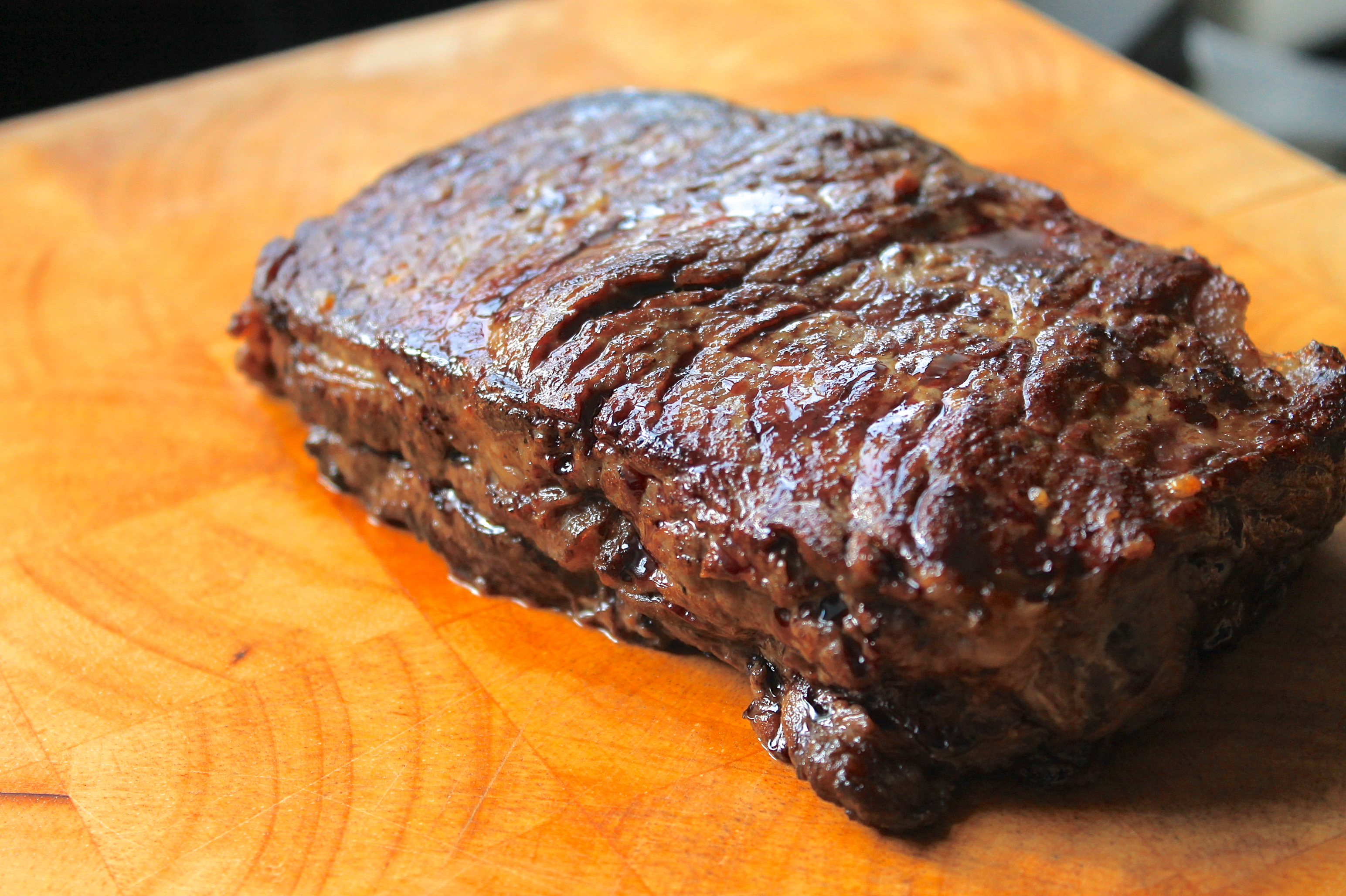
The beef was actually a lovely thick piece of Sirloin, off the bone and only about a rib thick, like a thick steak. I cooked it a little differently this time as I have a fancy oven setting called Low Temperature Cooking, which surprisingly does just that (it’s a beautiful example of efficient German naming). You simply sear the edges, for flavour, and then set it away for two to three hours – kind of like a sous vide in reverse. No resting, or precise timing needed.

I prefer a couple of smaller Yorkshire puddings than the biscuit barrel sized version you often find filled in pubs – the secret, apart from the batter, is to get the oil in the baking tray smoking hot first. It won’t fail you.

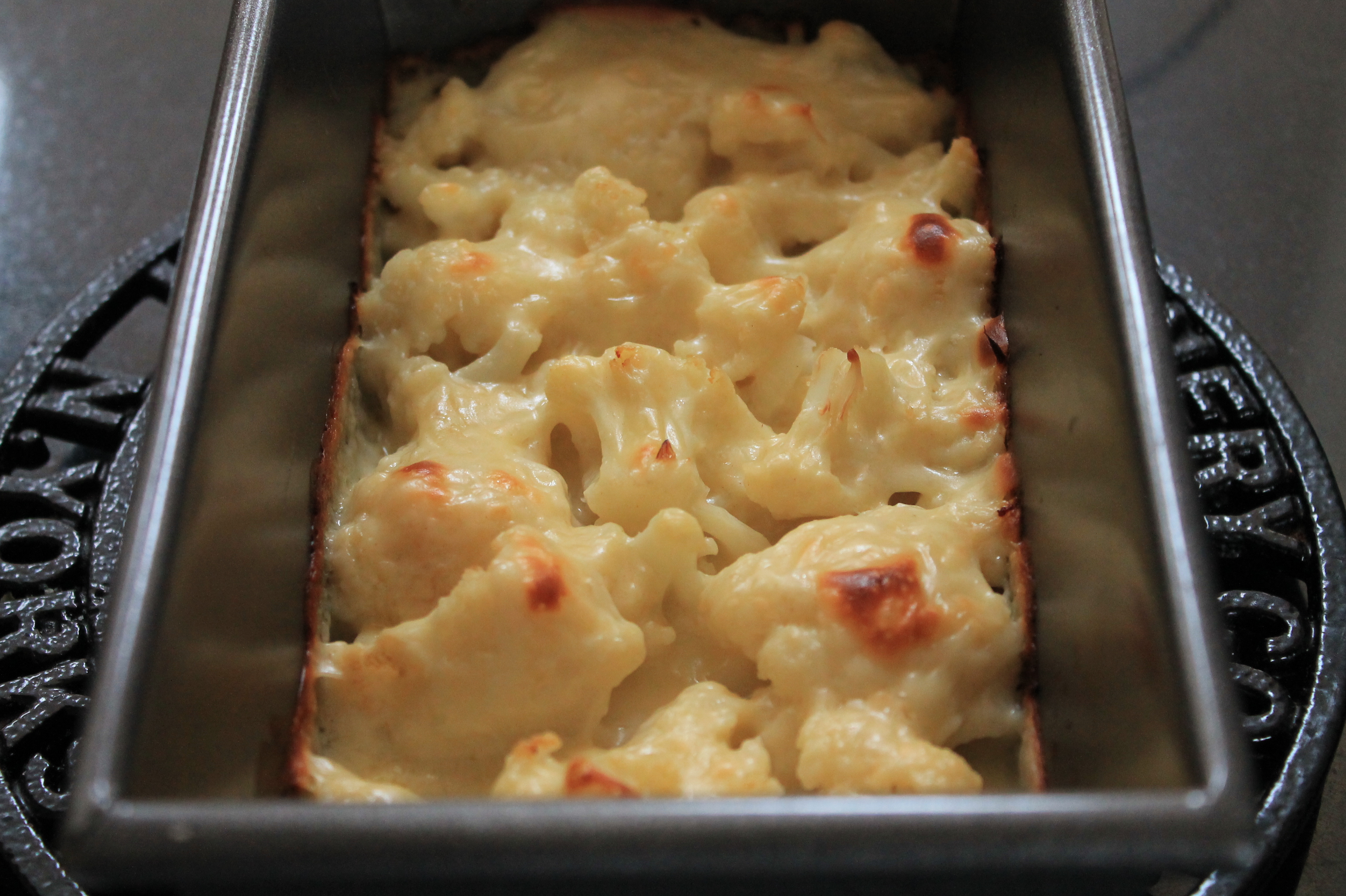
Cauliflower cheese is a favourite of mine and it is quite simple yet utterly delicious. Some cabbage would have been good, but I forgot it so we only had carrot as the other veg.

I made the gravy from a roast bone stock I had in the freezer, fried onion and a good splash of red wine and thyme. A nod to our French neighbours!

1 700g/24 oz sirloin steak – serves two with left overs.

For the Yorkshire Puddings (I can’t remember the source of this, I have it written down, but it works well):

  • 250g plain flour
  • 4 free range eggs
  • 150ml whole milk mixed with 150ml water
  • Salt and pepper
  • Oil

Roast the steak medium rare, as I like it. There is no one method or technique, as it will depend on the roast you have and the type of oven you’re using!

IMG_7544

About an 1 hour before the meat is done, peel and par boil some Maris Piper potatoes, rough up in a colander when draining and roast in a hot, hot oven for about 45mins – 1hour. Season and turn occasionally.

For the Yorkshire puddings, mix the eggs and flours to a paste and gently pouring the milk, whisking as you do so. A food mixer makes this easy. Season with salt.

In a cake/muffin tin, add a 1-2 tsp oil and put in the oven at 220 degrees C until smoking.

IMG_7529 IMG_7535

Pour in the batter and it should sizzle. Place it back in the oven for about 20 minutes or until beautifully risen and golden!

The cauliflower is simply par boiled then covered in a simple cheese sauce (made from a roux, about 400ml whole milk and 2 handfuls of grated cheddar) and roasted for about 30 minutes until coloured on top.

IMG_7550

The gravy is a reduction of the stock and a glass of red wine, with the thyme and seasoning added towards the end as needed.

IMG_7509

Pulled Beef Take 2 – The Pasta

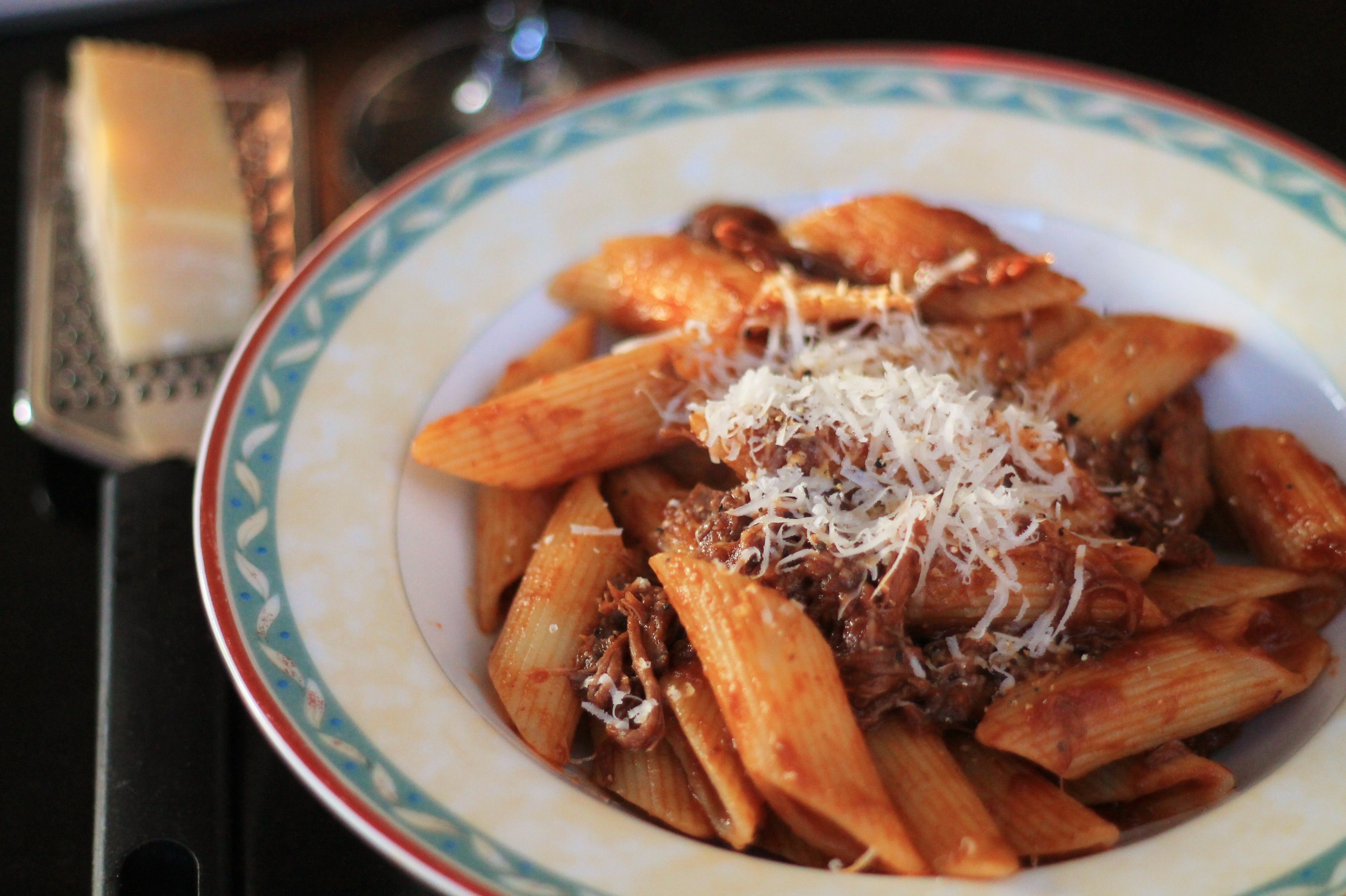
Pulled beef ragu

Delicious as it is, I wouldn’t normally bother you all with a beef ragu type dish. Everyone has their own version and favorite recipe anyway.

I thought I’d put this up here though as it is possibly the tastiest version I’ve made. It uses the left over pulled beef from yesterday’s post, which after being in the fridge for a day or two was even richer.

I was recently in an Italian restaurant in Newcastle that did the richest shin of beef ragu – it was deep red, almost purple from the wine and a little sweet.I was reminded of it by the pulled beef and so simply added a large glass of fruity red wine to the leftovers and let it reduce for a short while.

Slow cooked beef red wine

With a silicon spatula, it came away and held its ‘shape’. Done! Sorry about the steamy shot…

For the pasta, I used some big pennoni rigati tubes but any large, ridged pasta will do.

Yes, I know, pretty simple. Sorry. But big on flavour and totally worthy of doing.

Slow cooked beef ragu

Pulled Beef Take 1 – The Sandwich

Pulled beef sandwich and fries

I was recently fitted for a wedding suit. I have the joint honour of being best man and therefore we’re going for a matching ensemble as is tradition. The difference being these are fitted suits we can wear again.

I’ve never been properly measured for a suit before and it’s an eye-opening experience. Apparently my broken collar bone, which happened way back in my teens, has left me with one slightly lower shoulder. Trouble is, having never been remotely aware of this before, I swear I can see it now. Then there comes the mid-riff measurements. “The thing is..”, the Tailor said, “shops always label clothes generously, it makes you feel better about yourself and the clothes you’re looking to buy”. Well that bubble was well and truly burst ladies and gentlemen.

Time for action then I thought. The office lifestyle is taking its toll. Time to take a grip on this slightly ageing frame and beat it back into shape. Time for a top-down review of my diet.

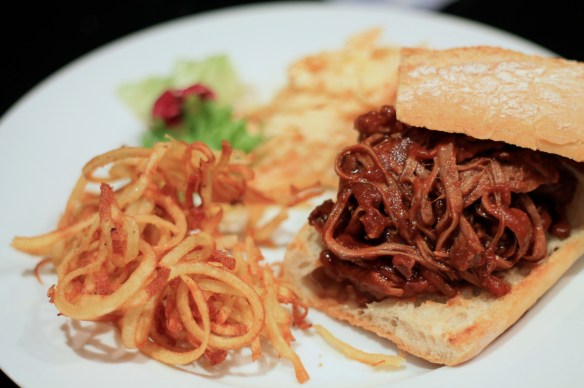
So anyway, where was I? Ah yes, pulled beef sandwiches with shoestring fries and coleslaw.

The thing is, I love cuts of beef slowly cooked. Given a choice between a steak and braised cheeks (the ones on the head), I’ll always tend to go for the ‘long and slow’ option. Whether pork or beef, it doesn’t matter for me, in my opinion this is the king of slow-cooked recipes. Thank you, USA.

There was a good butchers next to the Tailor’s shop and I picked up a well-aged piece of brisket. It wasn’t a huge piece by any means, but as you may have established by the title of this, it went a long long way and made a number of meals. Thrifty.

This pulled beef was cooked in a homemade barbecue sauce which was simplicity itself. The ‘shoes string fries’ weren’t as you’d traditionally describe them, but I recently bought a vegetable stringer and wanted to experiment. I think it worked. I also tried adding some tahini paste to coleslaw for a bit of a twist which I also liked.

I browned the meat then simmered it for 3 hours, but left it to cool and pulled it into shreds the following day. Tastes so much better if you can wait.

By the way, I joined my wife for a jog this morning. Think I needed it….

  • 750g/ 1.5 lb piece of lean brisket, trimmed of fat
  • 1 tin chopped tomatoes
  • 500ml/2 cups beef stock
  • 1 medium carrot, peeled and cut into 4
  • 1 medium onion, halved
  • 3 garlic cloves
  • 3 tbsp balsamic vinegar
  • 2 tsp mustard powder
  • 2 tbsp smoked paprika
  • 3 tbsp soft brown sugar
  • 1 -2 whole red chillis
  • 1 tbsp black peppercorns
  • Tahini paste
  • 1 large handful sliced white cabbage
  • 1 large hanful grated carrot
  • 1/2 onion, finely shredded
  • 5 tbsp mayonnaise
  • Salt
  • 2 medium potatoes – suitable for frying – I used Maris Piper.

Heat the oven to 180 ºC/350°F.

In a lidded casserole pot, brown the beef all over in a little oil. Then simply place all the ingredients in the pan and bring to a simmer on the hob.

Put the lid on and put in the oven for 2-3 hours, or until the meat can be easily shredded with a fork. Leave to cool overnight with the lid on.

Reheat the next day, to warm the meat through and remove it to a large plate.

Using a stick blender, make a smooth sauce with the cooking stock and leave to reduce under thick and concentrated. Season to taste.

Pulled beef

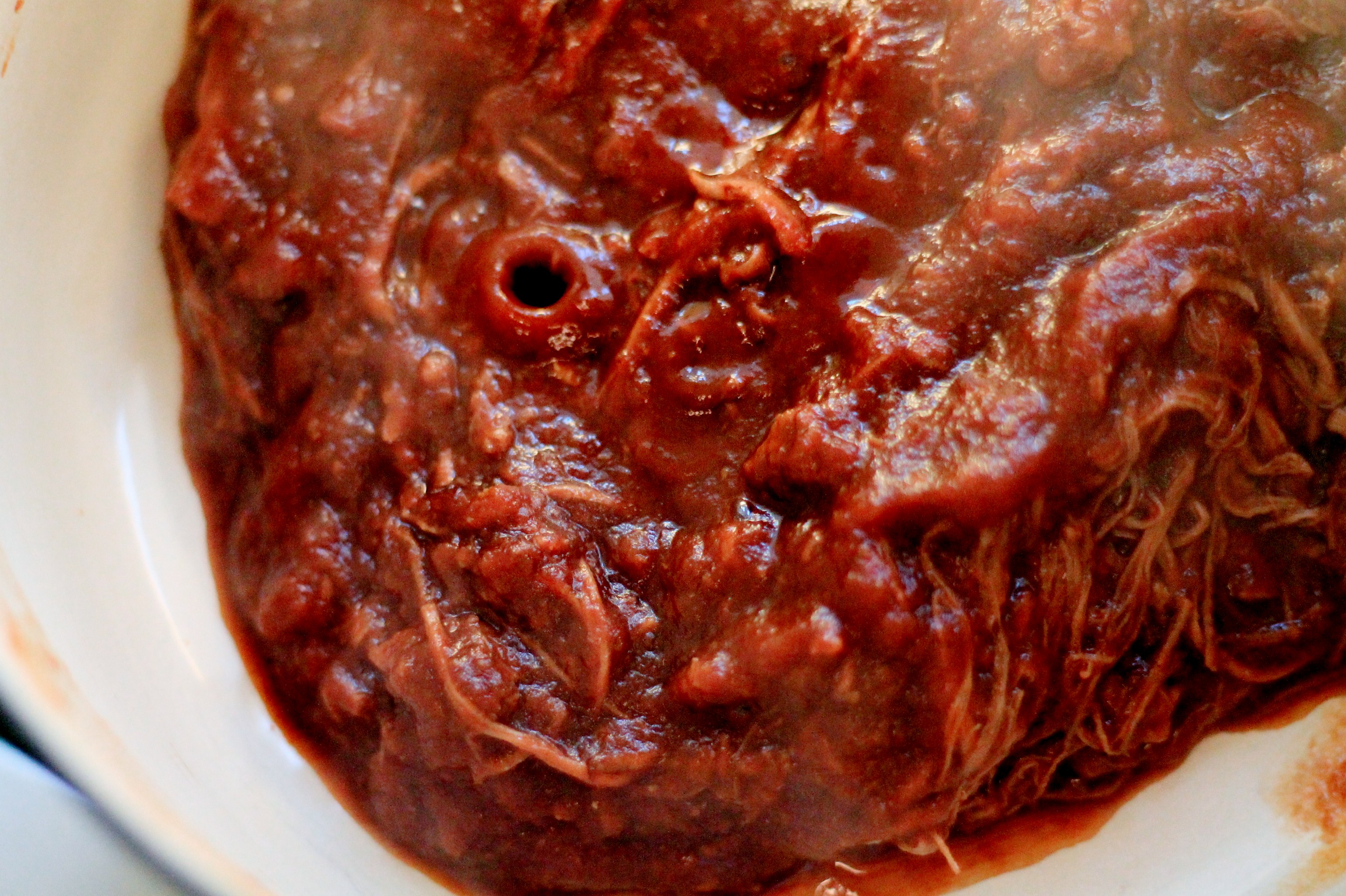
Shred the brisket with a pair of forks and return to the pan, to coat in the sauce. TRY hard not to eat it.

Pulled beef in BBQ sauce

Make the coleslaw by combing all the ingredients. Simple.

For the fries I used a new gadget to make long thin strings from the potatoes and then gently fried them in a frier at 160°C/320°F.

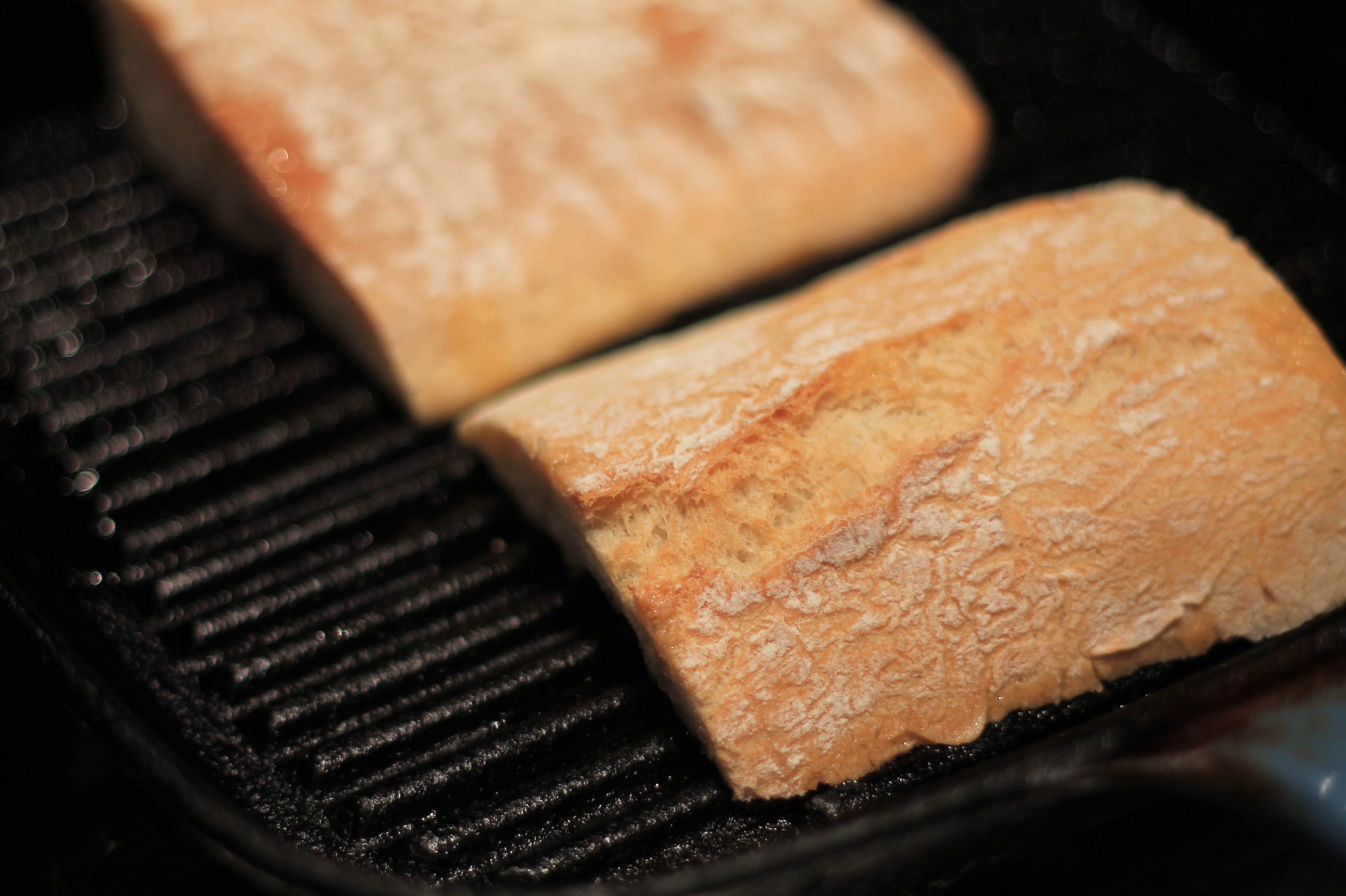
Whilst this is happening, half some bread rolls, brush with oil and griddle to add some nice smokey charring.

Bread - griddled


Put it all together and enjoy!

Italian Chicken Crumble

IMG_8099

As I went to post this yesterday, the sad news from Boston started filtering through, so thought I’d hang on a day….

Well we had a great weekend you’ll all be glad to know, after heading down to the Republic of Yorkshire for a quick weekend away. There, we met up with friends who were in the middle of cycling a 100 mile round trip for a nice dinner in a local gastro-pub. We actually  stayed in Helmsley, a lovely if a little ‘touristy’ town in the North of the county. But, hey, we were tourists so that’s a pretty hollow criticism.

I kid you not though, it’s only a matter of time before Yorkshire goes for UK independence – we started Sunday with a ‘Yorkshire Breakfast’ (a full English), and stopped by a deli where we bought Yorkshire pork and chilli sausage rolls and a Yorkshire game pie. Looking down from the counter I could see even Yorkshire crisps.

A lot of pride then and a bit of tub-thumping for the county. That’s good.

All of this has nothing to do with this dish of course, other than I thought it up on the relatively short trip home yesterday. It’s basically a savoury crumble as opposed to the usual fruit based variety you’d have for dessert. I genuienly thought I may have come up with something new, but a quick Google found, no, others have been here before. But still….

I made this with a bit of an Italian theme with pancetta, chicken thighs, Dry Vermouth and a topping made with oregano, thyme and Parmesan cheese. It was pretty good. The topping could have done with a few more minutes in the oven (I finished off with under grill) though. You live and learn eh?

This a bit indulgent, using a fair bit of butter in the crumble topping, but it is very rich and therefore a little goes a long way serving 4 or 5. It’s also full of veg. Go on, treat yourself!

  • 4 chicken thighs
  • 3 tbsp olive oil
  • 1 large garlic clove
  • 1 large onion diced
  • 3 cabbage leaves, sliced
  • About 10 cauliflower florets
  • 1/tin borlotti beans
  • 1 large carrot, diced
  • 100g pancetta
  • 500ml fresh chicken stock
  • 1 glass dry Vermouth
  • 200g plain flour
  • 100g butter 😉
  • Salt and Pepper
  • 1 tbsp oregano
  • 1 tsp fresh thyme
  • 2 handfuls grated Parmesan cheese

Start by preparing all the vegetables.

IMG_8057

In a large frying pan with a lid, fry the onion, carrot, garlic and pancetta until softened. Remove to a bowl and fry the chicken with a good pinch of salt until well coloured.

Add the vegetables/pancetta back in and the Vermouth. Reduce a little and add the stock. Reduce by half, adding the cauliflower, beans and cabbage only for the last 5 minutes so as not to overcook.

Strain the liquid from the pans into a jug. Add the vegetable and meat to a casserole dish.

Make a roux from 1 tbsp butter and 1tbsp flour, heat and slowly add the stock to thicken whisking as you add it. Taste and season if necessary and pour it over the casserole dish.

IMG_8073

Make the crumble either by rubbing the butter into the flour, or use a food processor as I did. Make sure the butter is cold and you don’t overwork it and melt the butter too much. You should have breadcrumb sized crumble if done right. Add the Parmesan and herbs and taste – season with salt if necessary.

Spread the crumble over and finish with a sprinkle of oregano and a little more Parmesan.

Bake at 200ºC/400°F (180°C/350°F in a fan oven) until golden brown and the topping is cooked through. About 20-30 minutes.

IMG_8083

Beef Chow Mein

Beef Chow Mein

The thing about Chinese food is that, in the UK at least, it’s ubiquitous. Go to any small town or large village in the UK and there will be a Chinese takeaway, or restaurant. Or restaurant with takeout. You get the picture.

It’s popular then, but yet outside the swankier districts of the major cities, it’s fair to say the food never reaches the status of ‘gourmet’. I know a lot of you will have examples where I’m absolutely wrong, but I know of up-market restaurants doing French, Italian, Thai, Indian, Japanese and British food, but none doing Chinese.

The thing is that Chinese food uses some of the planet’s tastiest ingredients. Amazing dim sum, peking duck, char sui pork, stir fired noodles. Need I go on. So what gives?

It’s fair to say that most Chinese takeaways vary widly, but the same suspiciously vividly coloured sweet and sour sauces remain a constant and the ingredients are rarely, and I’m sticking my neck out here, high quality. It’s why I don’t really go to them.

And so, armed with my Ken Hom e-book, I’ve been setting out to try and make the Chinese food I know and love without the luminosity, MSG and hydrogenated fat.

First on my list, a simple Beef Chow Mein. I used some left over rare beef from a Sunday lunch (which I will be posting in a St. George’s Day special) but other than that the ingredients were cheap and beautifully quick to cook.

The beef is important here as cheap cuts will turn to rubber – this was from a well-aged piece of sirloin. But most recipes call for fillet. It seems sacrilege to use such a quality (and expensive) piece of meat this way, but at least you don’t need much! I dipped it in cornflour before cooking to get a nice crispness.

Prepare all the ingredients first, it’s essential otherwise you lose it halfway through. This was on the plate in 6 minutes tops once the wok is going, so you snooze – you lose in this case…

Serves 3-4

  • 200g medium egg noodles
  • 3 tbsp oil – seems a lot but worth it
  • 150g sliced beef – must be a decent cut, seasoned, oiled and dusted in cornflour
  • 2 handfuls of beansprouts
  • 1 small onion thinly sliced
  • 1 garlic clove, finely diced
  • 1/2 green pepper, thinly sliced
  • 1 tbsp Oyster sauce – a good one, it’s worth it
  • 1 splash & 2 tsp Soy sauce
  • 2 tbsp rice wine or sherry. I used sherry
  • Pinch of white pepper
  • 1 tsp Sesame oil

Prep all the ingredients. Cook the noodles as instructed until just done and not too soft. Rinse under a cold tap to cool and drain well.

Heat a wok with the oil until screaming hot and add the cornflour coated beef. Stand well back then get in there and stir! Add a splash of soy to colour the beef.

Add the onion and garlic and stir until coloured then the rest of the soy and rice wine/sherry. Evaporate off the liquid a bit then add green peppers, beansprouts and noodles.

Beef Chow Mein

Stir fry for a couple of minutes on a high, high heat. Pour in the Oyster sauce, and sesame oil. Serve it up! Phew

IMG_7593

‘Posh’ Bangers and Mash with Roast Mushrooms

Posh Sausage and Mash

I started my blog up a mere 6 months ago now. It was something I was wanting to do for a while but faced the usual (I guess) hurdles of the fear of self publicising and having enough content. There was also the very real problem that I had no idea how these things work – but thanks to the good people at WordPress I was up and running easier than I imagined.

It’s been a great distraction from the day to day pressures of running a business and a brilliant way to channel my curiosity and interest in food and cooking. Then there’s the other benefits of being in a community of like-minded bloggers from across the world. I’ve been introduced to some genuinely interesting and funny people through this.

The only problem is it begins to takeover. I’m sure as most of you reading this with your own blogs know what I mean. I’m constantly on the look out for ‘bloggable’ ingredients and quirky produce.

I say problem, but then it isn’t really. It gets you out of your comfort zone, always looking for something new and interesting. Seeking out new cuisines and trying tricky dishes.

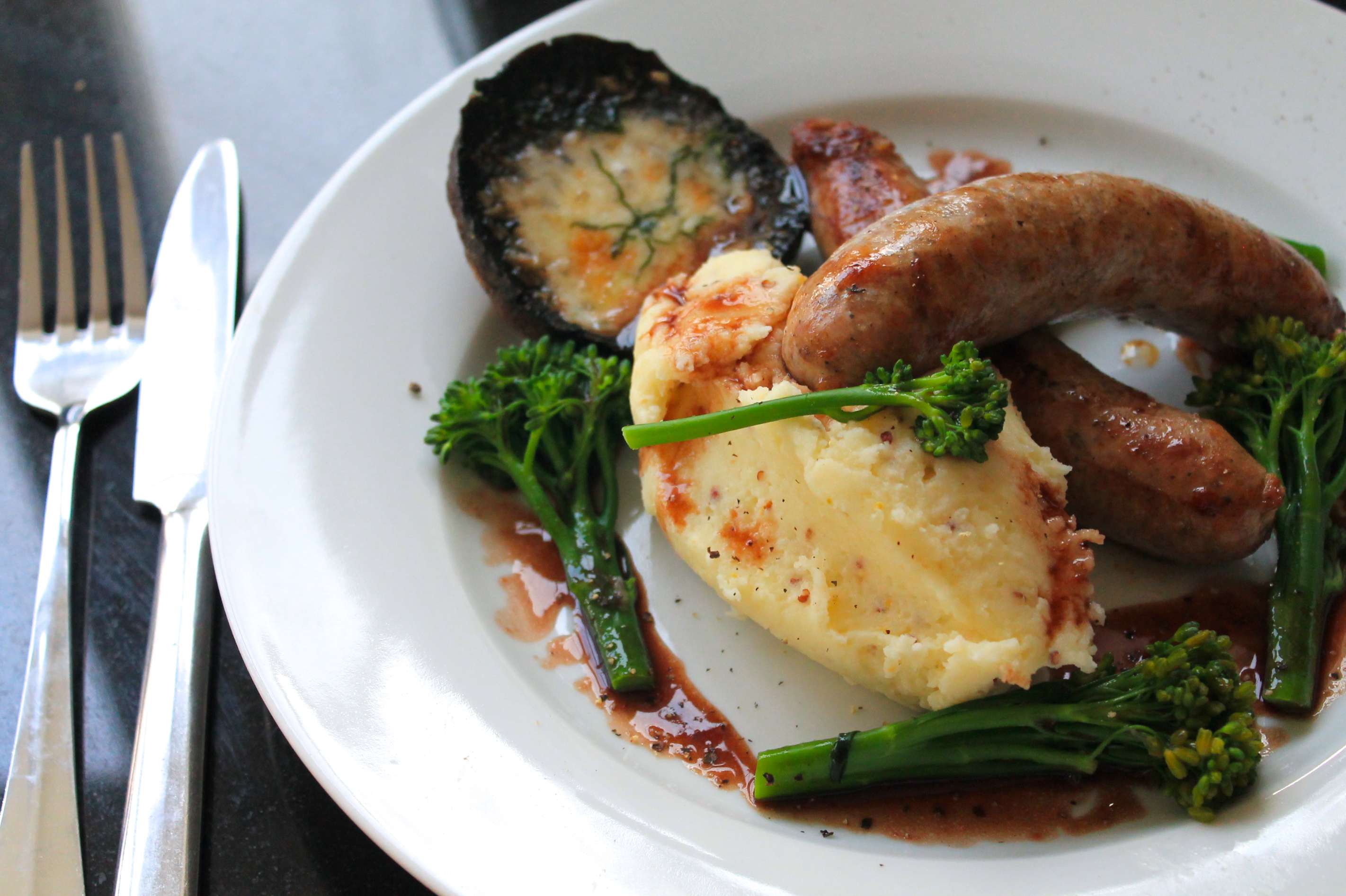
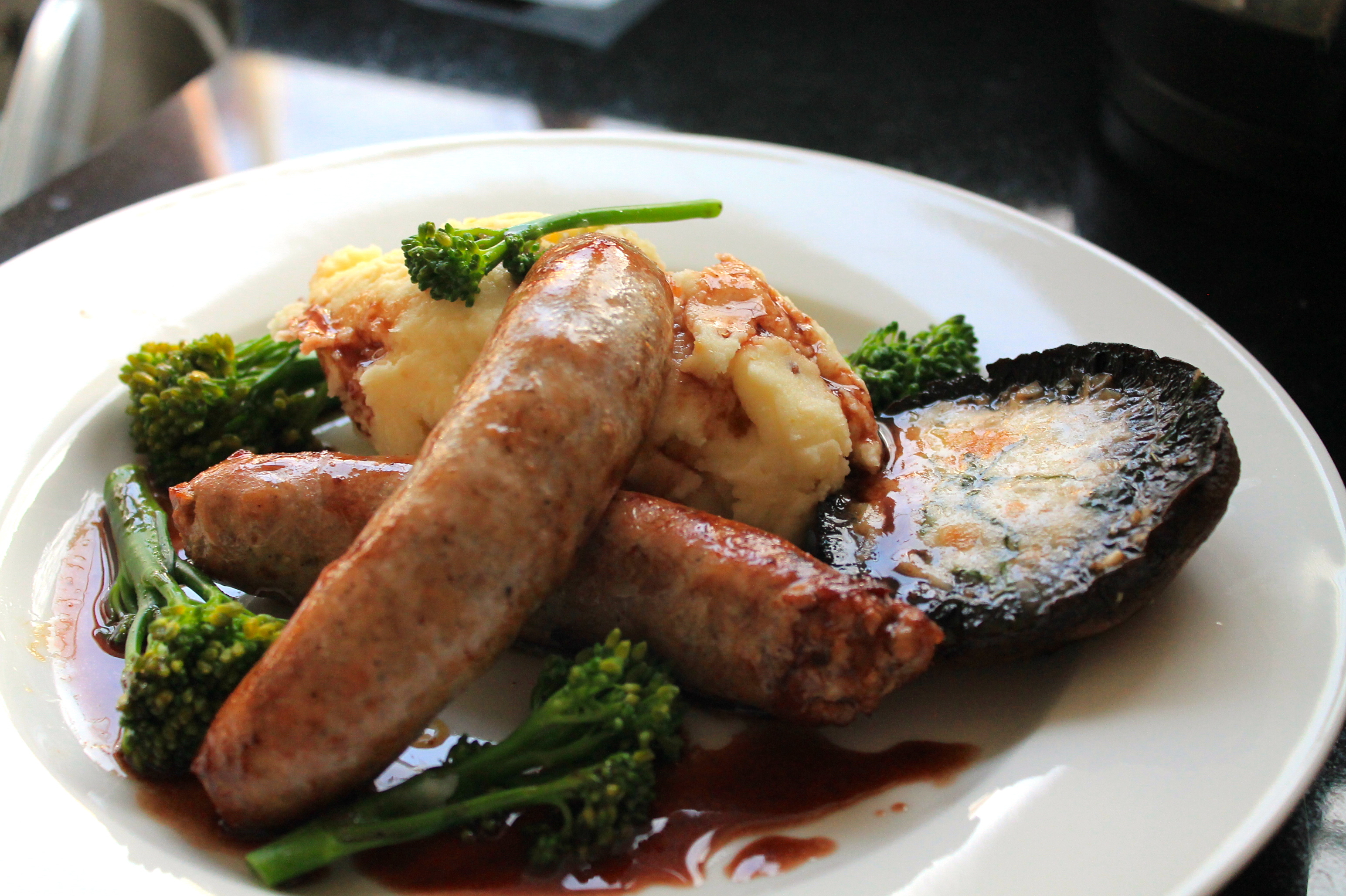
So, having said all that, I present to you – Bangers and Mash. They’re ‘Posh Bangers and Mash’ I grant you, but sausages and potatoes nonetheless. Hmm, I’ve learned nothing.

It was really the culmination of two scenarios – the ageing Toulouse sausage and mushrooms in the fridge and a little quest I had after reading a recipe by Frances Atkins, Head Chef at the Yorke Arms – where I had one of my favourite ever meals.

It included making a red wine reduction, which was something I hadn’t really been doing properly by all accounts. A bit embarrassing really as it’s so simple. I had some fresh chicken stock I made up earlier in the week and used that.

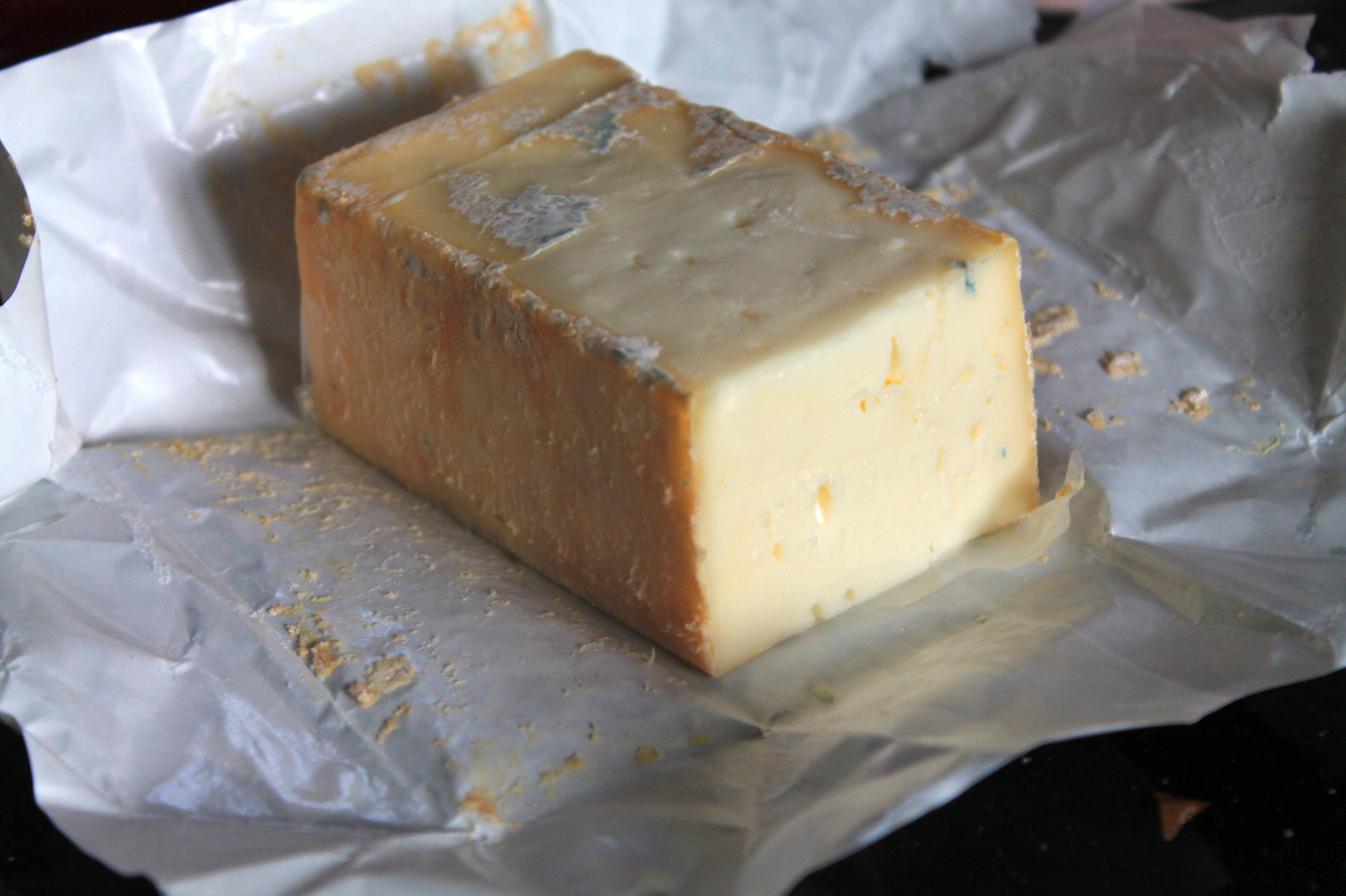
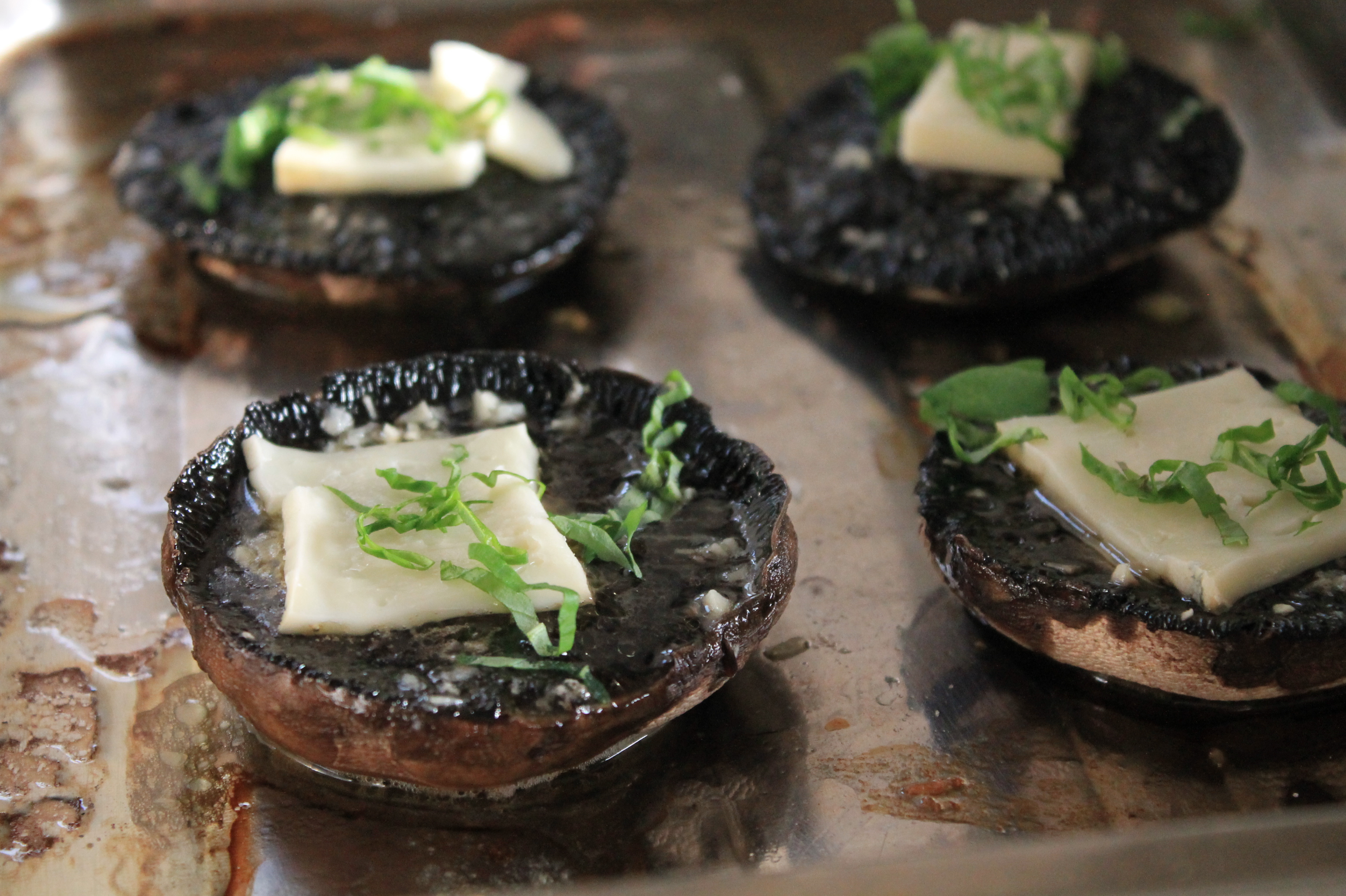
The mushrooms were a bit of a side-quest really but I’m really glad I did them as they worked brilliantly with a bit of strong Taleggio cheese and fresh basil on top.

IMG_7410

Taleggio cheese

I won’t go into making the mash, we all make own our favourites, but I mixed it with wholegrain mustard, butter and single cream. It was Friday after all.

Serves 2

  • 4 Toulouse Sausages.
  • 1 onion, sliced.

For the red wine reduction

  • 1 large glass fruity red wine
  • 300ml/1 cup Fresh chicken stock
  • 1 tsp balsamic vinegar
  • 1 knob of butter
  • Salt if needed. I didn’t.

For the mushrooms

  • 4 large mushrooms – I had Portobello.
  • 1 tbps butter melted with a 1/4 tsp chopped garlic.
  • 4 basil leaves. Shredded.
  • Drizzle of olive oil
  • Salt and pepper
  • 4 slices of Taleggio cheese.

Start with the red wine reduction as this can take the most time. Pour the lot into a small sauce pan and bring to a simmer. Reduce until it coats the back of a spoon according to Ms Aktins. She’s absolutely correct of course… Finish it off with a knob of butter for shine and flavour.

IMG_7417

Next roast the mushrooms in the oven with a drizzle of olive oil and salt for about 15 minutes on a moderate oven.

Oven roast mushrooms

Halfway through, brush on the melted butter/garlic. Just before you need to serve, put the Taleggio cheese and basil on top. Melt under a grill until coloured.

IMG_7416

For the sausages, simply pan fry them to brown all over with the onions and then place in the oven with the mushrooms to cook through. Deglaze the pan with a little red wine and add to the reduction if you want – I did and it made it even richer

Serve it all together with a nice cheffy drizzle of the reduction – it’s pretty rich. A good glass of red wine finished it off nicely! Happy weekend.

IMG_742