Chicken Milanese and Spaghetti Pomodoro

Chicken Milanese with Spaghetti Pomodoro

And so the end of the UK financial year approaches and as is typical of this time of year, government organisations are busy spending what’s left of their budget before some bright spark takes any unspent amounts off them for the next. Kind of reminds me of the way, before Euros, holiday makers would frantically try and spend their drachma, before boarding the plane home (unless you were a Greek holiday maker of course). Always baffles me that one. No, not baffles, annoys. It means a huge slug of work descends upon me for two unfeasibly busy months of the year whilst we work to this magic ‘must be invoiced by early April’ deadline.

Don’t get me wrong, I should be grateful in these tough times, but it has meant working a lot of late nights and weekends. In turn, cooking takes a back seat and takeaways and restaurants move up front.

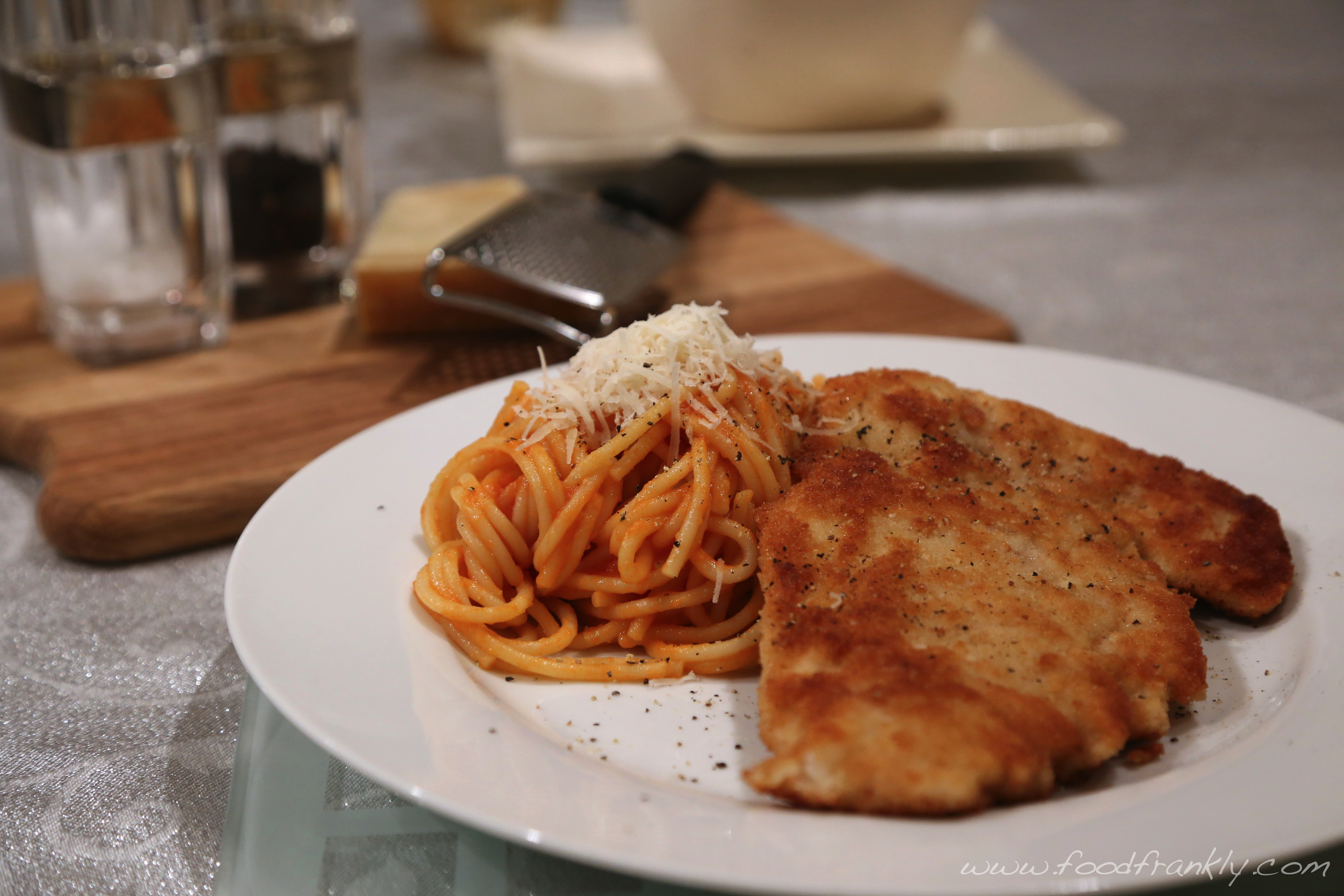
Whilst still busy, I’m trying to ease back into the old routine and thought I’d post a Frankly household favourite of Chicken Milanese, or less romantically, breaded chicken. It meant I also got to show off my oblong plates, bought for me by Helen a little while back 😉

For this I had some nice free-range chicken fillets which are simply bashed flat and breaded in the usual production line of seasoned flour, egg and breadcrumbs. I used some panko breadcrumbs here which I know aren’t traditionally Italian of course, but are nevertheless great for this dish. For a bit more flavour I also added freshly grated parmesan to the crumbs for a salty kick.

IMG_7085

IMG_7090

IMG_7091

I made twice the amount of spaghetti I needed to take the rest into the office for lunch 😉

Seves 2:

  • Two chicken breasts at room temperature
  • Oil for shallow frying
  • 1 egg, beaten
  • 150g or 1/2 cup of flour, seasoned with salt, chilli flakes and pepper to taste
  • two large handfuls of panko breadcrumb (ordinary will do of course)
  • 1 small handful of grated parmesan
  • 150g spaghetti 
  • 2 tsp salt (for the pasta water)
  • 1 clove of garlic, finely slices
  • 1 tbsp olive oil
  • 7 large fresh tomatoes, quartered (or use tinned – 400g)
  • 1 good pinch sugar
  • Salt to taste
  • 1 tbsp quality extra virgin olive oil to finish

Start with the pasta sauce: Gently fry off the garlic in a medium pan for a minute and add the tomatoes. Bring to a simmer, so the juice start to com out

Using a blender, blitz the tomatoes to a smooth sauce and push through a fine sieve with a tablespoon back into a pan. Add the sugar and leave to simmer for a few more minutes. Turn off the heat and season to taste.

Boil the pasta. I won’t go into details here! Once the pasta goes into the boiling pan, though, start the chicken. It’s flat so won’t take long to cook

Put a large pan on the heat and add enough oil to cover the bottom. Bash the fillets flat using a rolling pin and some cling film. Dust them in the flour then dip in the egg, ensuring you remove any excess. Lastly, cover in the breadcrumb, pressing down to coat them well.

Fry for 10  minutes until just done (or they’ll dry out) – I used a thermometer again.

Check the pasta!

Gently warm the sauce if needed and stir through the drained pasta. Bellissimo.
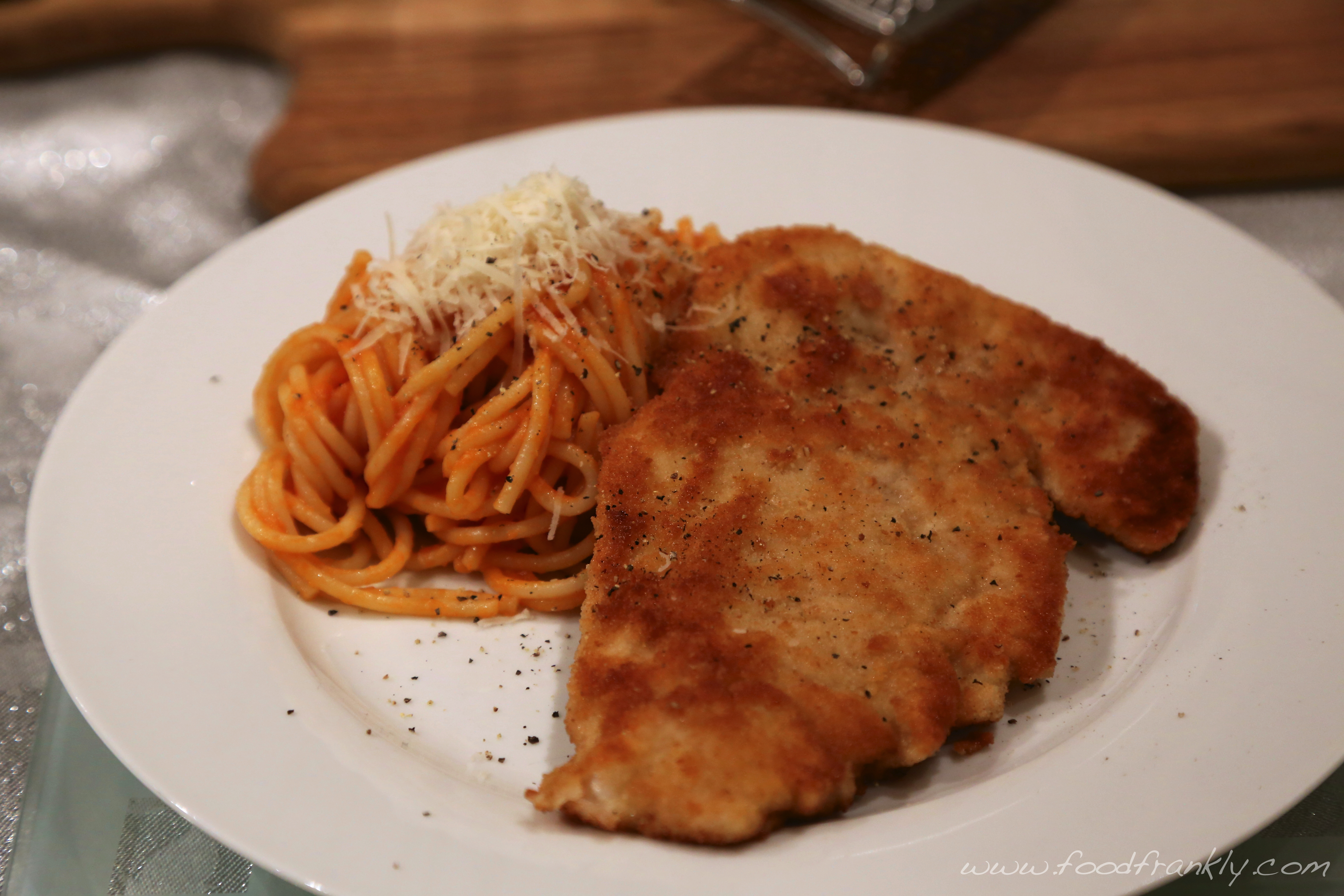
Chicken Milanese with Spaghetti Pomodoro

Duck with Potato Puree and Quince Jelly Sauce

Duck with quince jelly and potato puree

And so, another weekend flies by and with it, Sunday afternoon. This part of the week was traditionally a bit of a departure lounge at the end of a holiday for me – waiting patiently for the return flight to Monday morning.

In the Frankly household of late though I’ve tried to fight off the dreariness as I attempt, and I use that word advisedly, something I have neither the time nor inclination to piece together in the week. I’m not sure this really fits that bill, but it was something new.

I had some duck breasts in the fridge and (sticking to a theme from a couple of posts ago) some quince jelly. I remember reading somewhere that these go together pretty cosily, as duck can be paired with pretty much any sharp tasting fruit and so decided to incorporate into a sauce.

My minor obsession experiments with purees continues, my apologies, but I’d never actually made a potato puree before (or should I say pomme puree – this dish has a decidedly French tone) so thought I’d give it a go.

I pan fried the duck to keep it nice and rare. Well-done duck breast should be outlawed under some EU treaty in my opinion, but have had it in some over-anxious restaurants probably concerned more with keeping its punters out of the bathroom.

The sauce was a reduction made with the pan/resting juices, some red wine (a nice Shiraz  – full of berries), chicken stock and the quince jelly.

For the potato puree, I must admit, I think I over-worked it a bit and it was a bit gluey, not bad by any stretch, but more like “C+, good effort”. Schoolboy error.

  • 2 duck breasts at room temperature
  • About 10 button mushrooms
  • Salt and Pepper
  • Oil

For the potato puree:

  • 4 medium potatoes, peeled and cut into chunks
  • About 150ml warm milk (enough to make a loose puree)
  •  Butter – to taste or as your waistline dictates 😉
  • Salt

For the sauce:

  • 200ml good ‘fruity’ red wine (I used Shiraz)
  • 200ml chicken stock
  • About two tbsp quince jelly
  • Salt
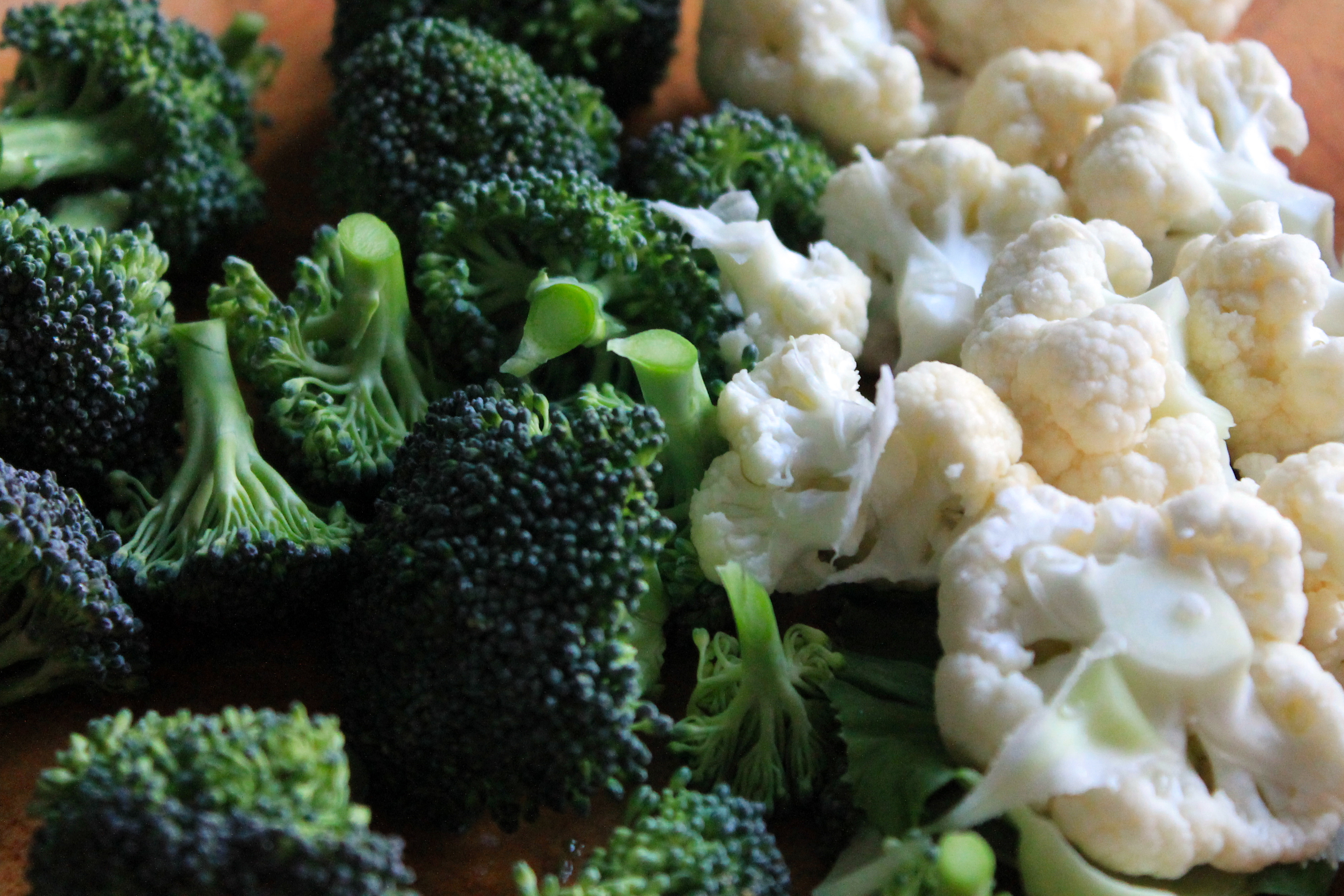
  • Steamed Cauliflower and Broccoli to serve

Broccoli and Cauliflower

Start by getting the potatoes on to boil. Once simmering away, get on with the rest…

Get a metal pan smoking hot with just a little oil. Rub the duck breasts with a pinch of salt and pepper on each side. Place in the pan, skin side down, to coat in oil. Leave to cook on a medium heat for 10 minutes. It releases an alarming amount of oil, but don’t worry, it won’t all be in the final dish.

After ten minutes, flip them and cook to other side(s) until well seared all over for 3 or 4 minutes – this will leave them nice and pink in the middle.

As soon as I flipped them I actually added the vegetables to steam for a few minutes in a steamer insert over the potatoes. Saves washing up and energy!

Before the end of cooking the duck, the potatoes/vegetables will probably be done, if they are, drain the potatoes and leave in the hot pan to dry a bit, but place the steamed vegetables to keep warm in an oven.

Remove the duck breasts and leave to rest in the warm oven (80C) on a plate. Fry off the mushrooms for a few minutes until tender in the duck fat and then set aside with the duck in the oven.

Pour out most of the fat, being careful to leave in any caramelised bits and deglaze the pan with the red wine. Pour it into a small saucepan and reduce rapidly for a few minutes with the chicken stock. Add the quince jelly and any resting juices from the well rested duck and season to taste.

I thickened it slightly with arrowroot, but it’s not essential. Finish the sauce with a knob of butter for taste and shine.

Lastly use a potato ricer (best – but a masher will do) to mash the potato. Microwave the milk to warm it through for 30secs to 1 min and pour it in with the butter. Stir well to make a puree and season to taste. Don’t overwork it like I did, stir gently.

Sliced duck breast

Slice the duck at a nice ‘cheffy’ angle. Plate it all up on very hot plates and pour over the sauce. Enjoy with a large glass of Shiraz. Salut!

Variations on a variation of a theme……

Sweet potato and polenta 'cottage pie'

Busy, busy busy. I’ve been busy.

Blogging about food, fun as it is, but doesn’t pay the bills so work comes first I’m afraid. Getting back late every night means sticking to tried and trusted faithfuls for me and so I had nothing particularly blogable (some may say I don’t anyway 😉 ).

I did however have a hankering for a shepherd’s/cottage pie midweek and some lovely leftover venison from the roast I made on Sunday. A plan was forming. I remembered a very nice dish of braised venison at an Italian restaurant recently and thought about varying the theme a bit. I had some sweet potatoes left over and, brilliantly, I thought to myself, some polenta.

I made a simple, but rich stew from the left over venison. I didn’t make it from a recipe, nor did I make a note of any quantities, but it was a standard affair of red wine, mirepoix and beef stock, with added diced swede and baby carrots. I actually made it the night before I used it, it’s always better that way.

I made two cottage pies (as  I suppose they must be) one topped with mashed sweet potato, the other with a fairly wet polenta.

The sweet potato was simply mashed with butter and some thyme, but to the polenta I added some taleggio cheese. I used a couple of bread tins to split the venison and topped each with the polenta and sweet potato respectively.

IMG_6938

IMG_6935

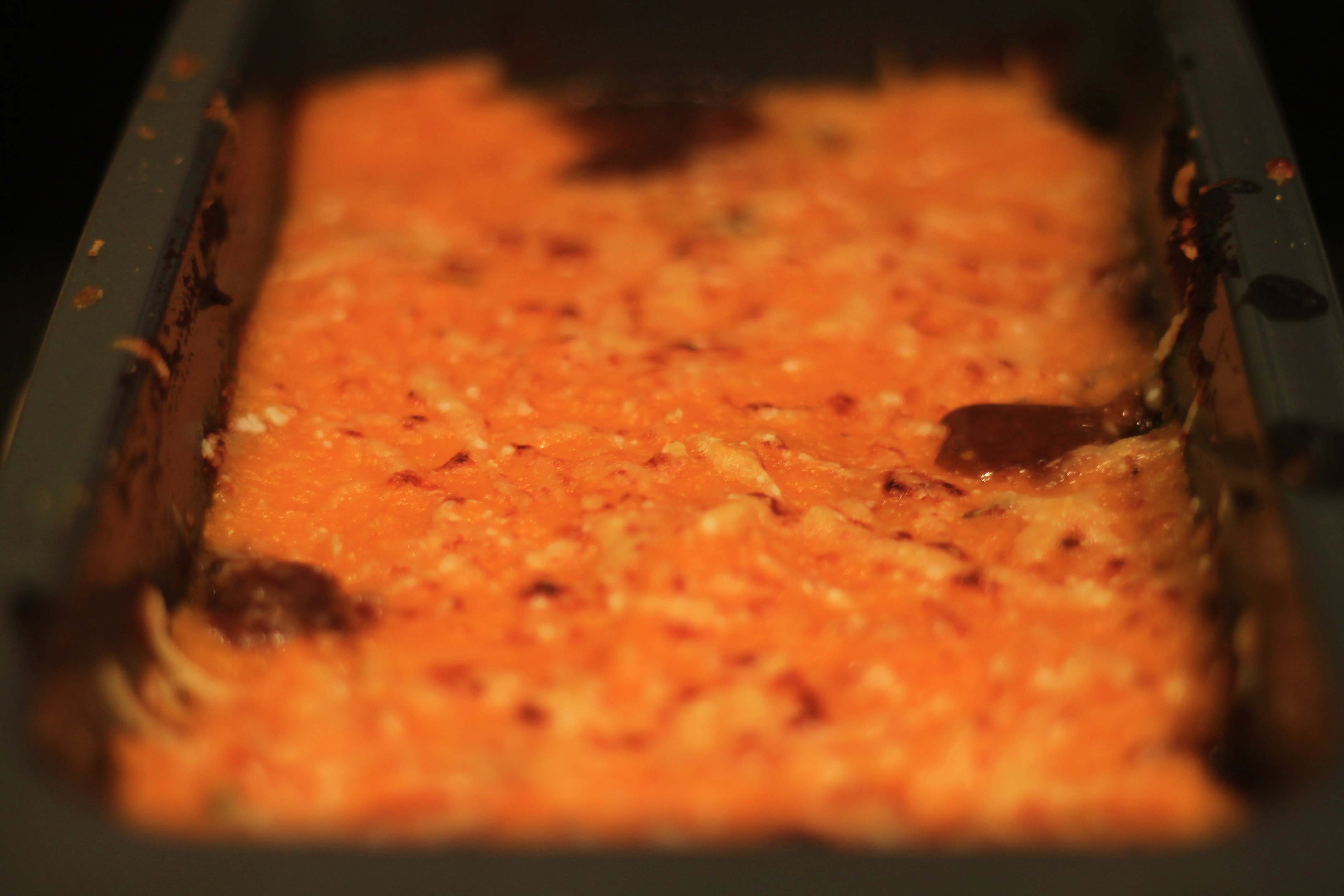
To both, I scattered on the grated end of a block of parmesan. It really was a great way to use up the fridge contents. I baked them at 180C, or 350F for about 20 minutes and turned on the oven grill element for the last ten to get a nice crust.

They were both very good, I preferred the polenta which I thought was a bit of a triumph to be honest, but then, I really like polenta….

IMG_6946

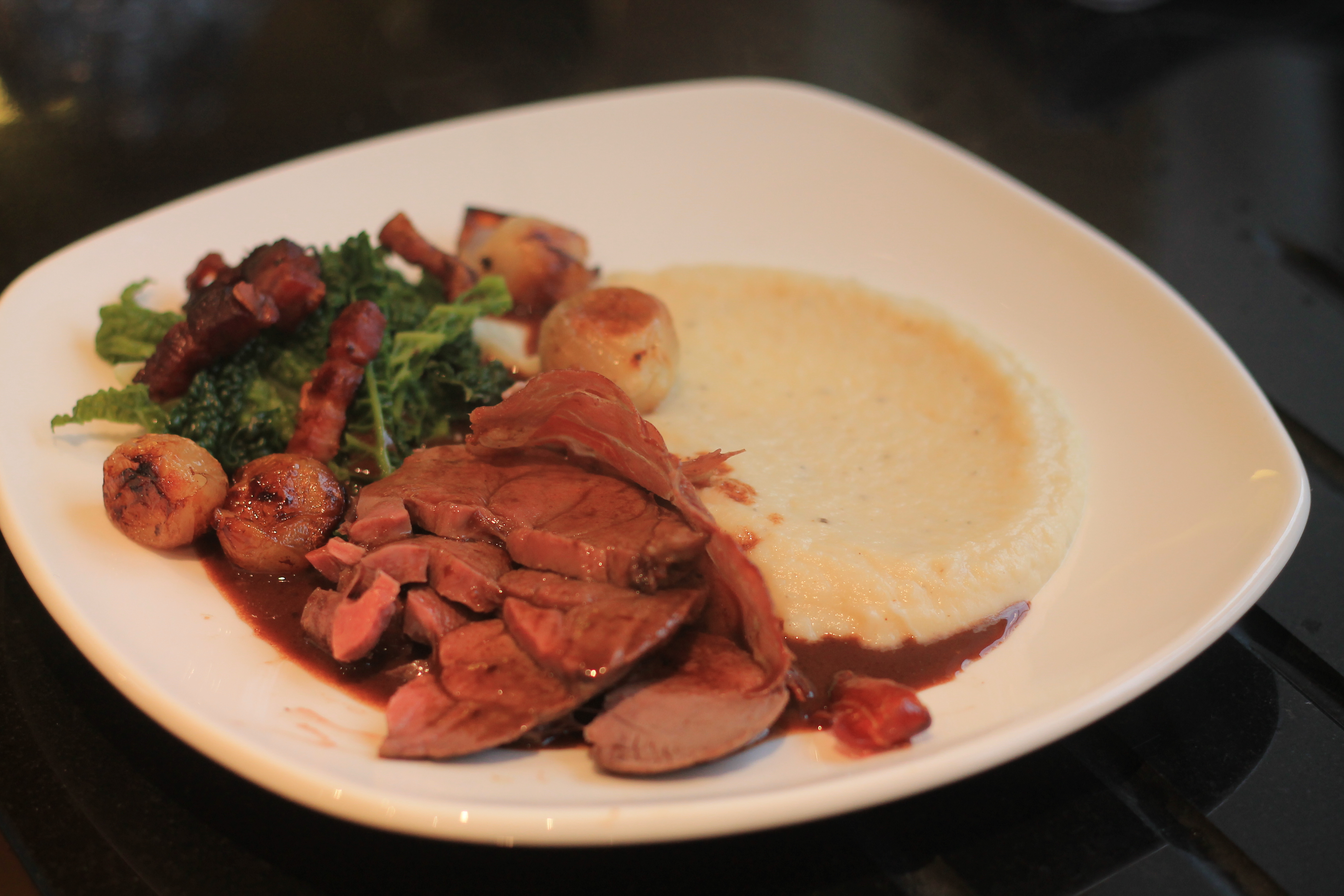
Roast Venison with Chocolate Sauce and Celeriac Puree

Roast Venison with Chocolate Sauce
Amazingly, I took a day off with Helen on Friday, primarily to attend the Spice Festival in Newcastle. Unfortunately (or some may say typically), we turned up to find it didn’t actually start until 4pm. Ah well.

So, we headed off into the city for a quick look around, a decent coffee and to make the most of our rare day off together. Somewhat more fortuitously though, there was a small farmers’ market on with some good local suppliers, no doubt doing a great trade thanks to supermarkets shooting themselves in the foot. Good times.

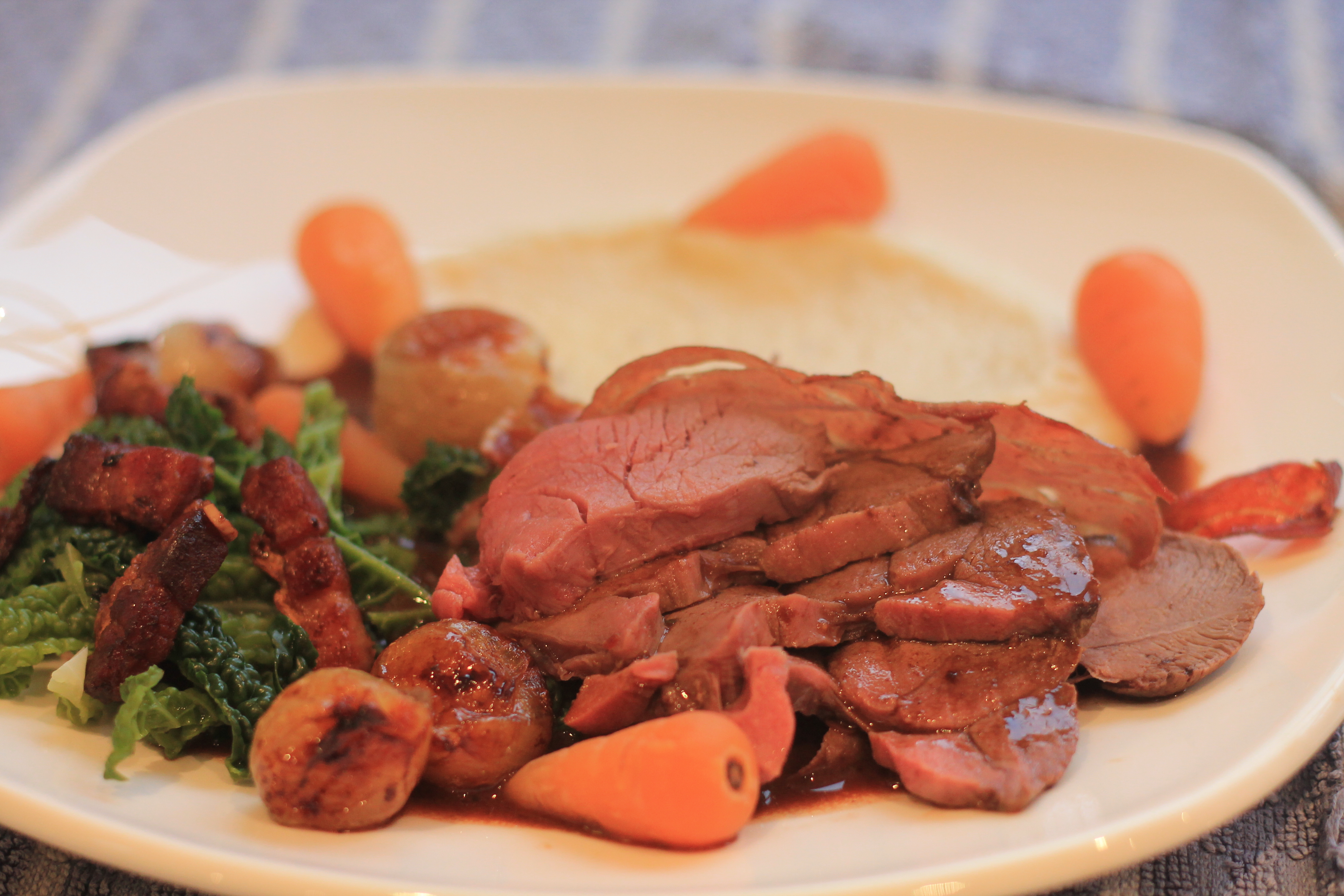
One stall caught my eye – a small supplier selling game meat called Ridleys Game and Fish, based near Hexham in Northumberland. A quick Google on the way to get some cash, revealed they have been awarded Great Taste Awards for some of their produce, which in my experience is a very reliable seal of approval. In particular, there were various cuts of Sika Deer Venison which I’d never come across before. It’s not cheap, but I was keen to try it and I went for a rolled and tied haunch. Thankfully, I wasn’t to be disappointed, this was some of the nicest venison I’ve tasted – so much flavour and yet still tender.

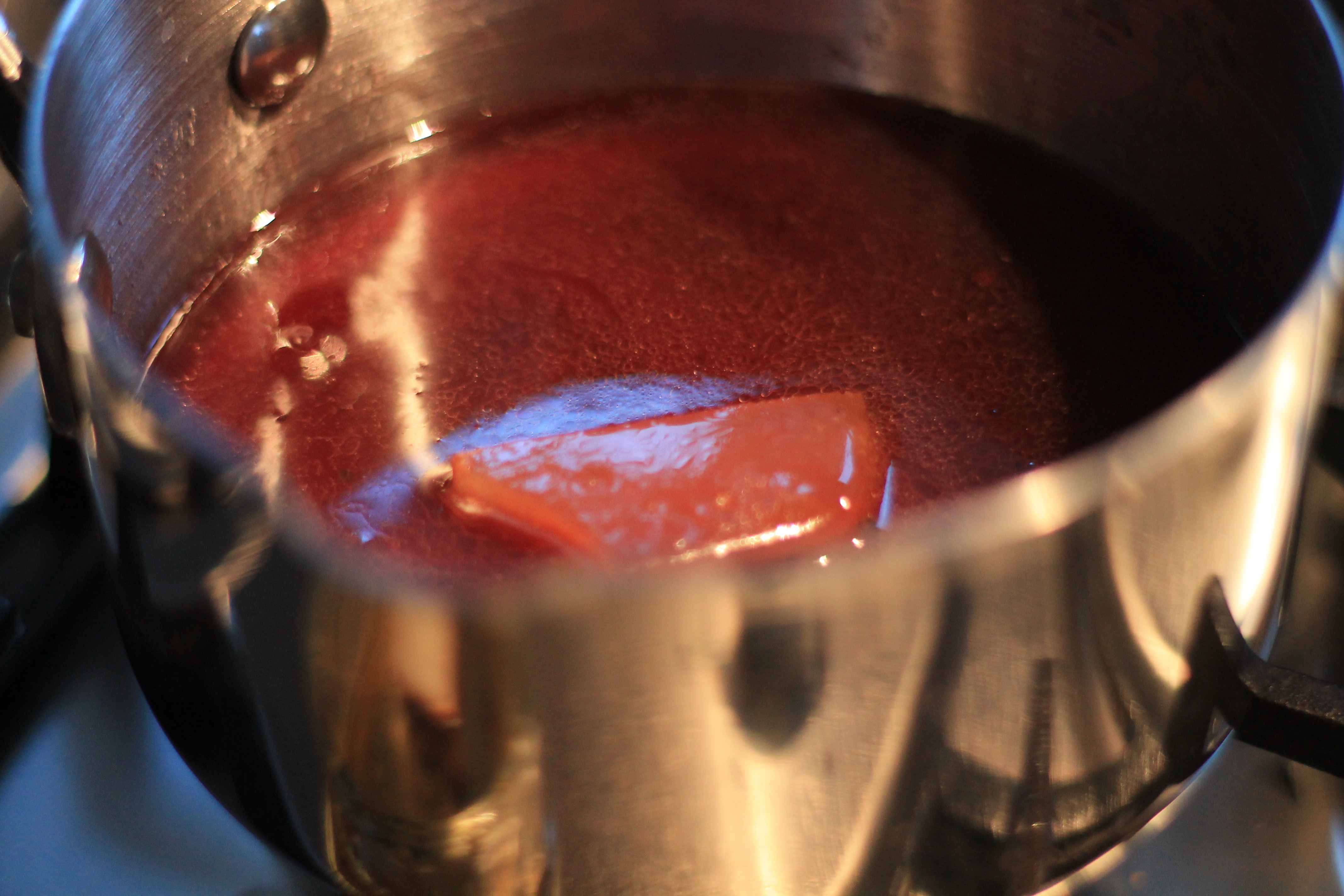
I posted a venison dish a couple of weeks ago, so I apologise for another so quickly, but it is only in season for another month, so make hay while the sun shines eh? I wasn’t sure what to do with it but I did make some comments about making a chocolate sauce with real chocolate next time I made a venison dish. I also found some quince paste and remember seeing a recent BBC show that used it in a sauce. I thought it would work well here, but it is optional.

The venison itself was cooked fairly rare in about 40 minutes. A little longer than the twenty minutes some sources stated I should cook it for. I was ‘johnny on the spot’ with the themometer as it’s a very lean meat and like all leans meat can turn disappointingly dry in the blink of an eye. It really is the best kitchen gadget I’ve ever bought, well worth it.

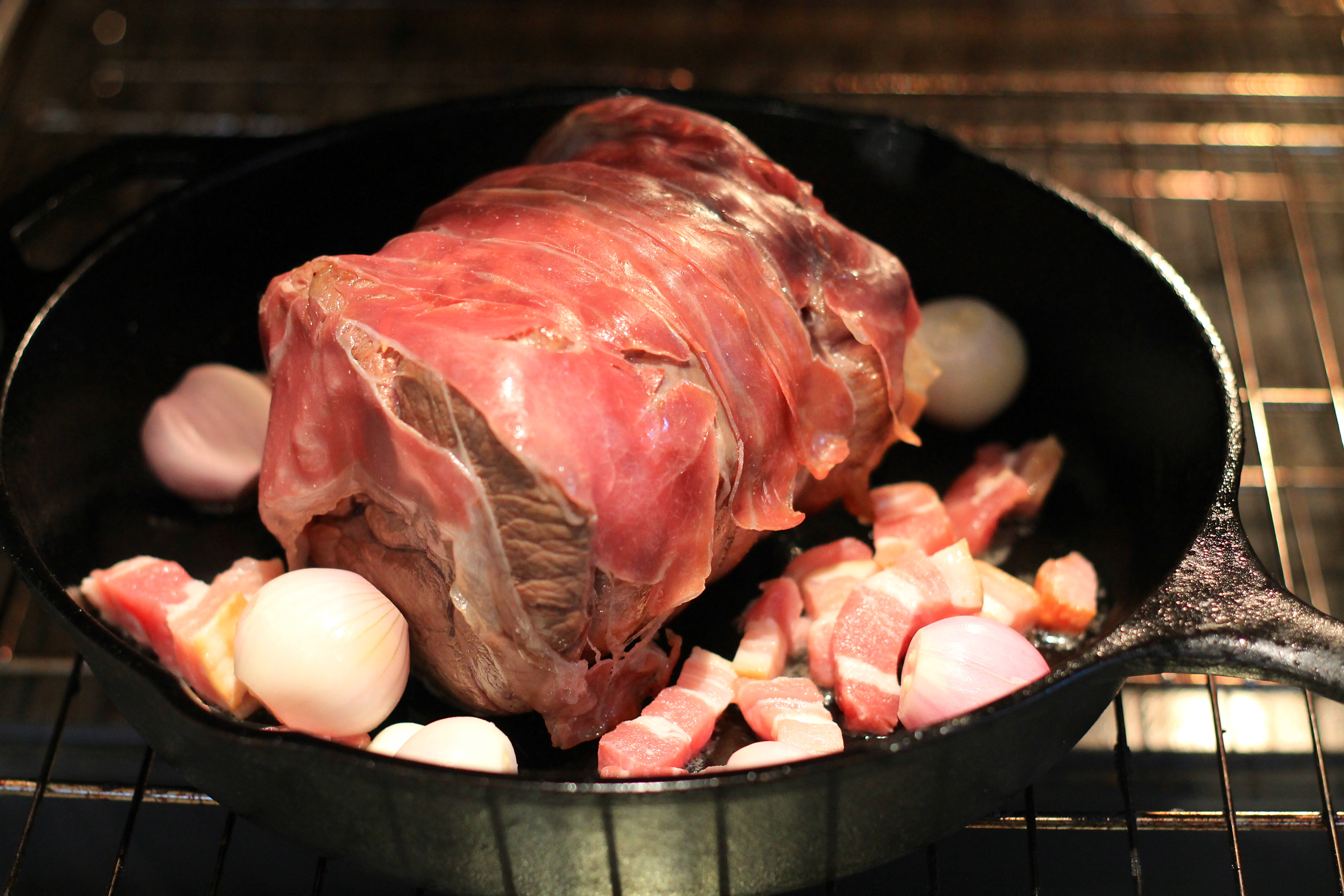
It’s a game meat, so you can throw some big flavours at it and I added parma ham, smoked bacon lardon and shallots to the roasting process for which I used a cast iron skillet. I made a sinfully rich celeriac puree, which was inspired by a dinner I had last night with good friends in Leeds to finish it off along with simply steamed carrot and cabbage.

I will be honest, this worked very nicely. It was uber rich and all the better for it.

Serves two with leftovers:

  • I rolled and boned haunch of venison (about 1 kg or 2 lbs)
  • 100g smoked bacon lardons
  • 3 slices of parma ham
  • about 10 shallots peeled but left whole

For the chocolate sauce:

  • 2 garlic cloves
  • Rapeseed oil
  • 60ml Port
  • 300ml light stock, I used chicken, but veal/game would be better
  • 1 small knob of butter
  • Salt to taste
  • 1/2 tsp quince paste
  • 1/2 tsp balsamic vinegar
  • 20g dark (70% coco) chocolate (or, to taste)

For the celeriac puree:

  • Half a celeriac
  • About 200ml whole milk
  • About 1 tbsp butter or more if you like (I said it was rich….)
  • Salt to taste
  • About 10 whole baby carrots
  • 3 cabbage leaves, stems removed and sliced

Start with the venison:

Get the oven on to about 190°C/375°F.

Get the cast iron skillet smoking hot with a little oil. Season the venison and brown it all over. Remove and wrap around parma ham to cover before returning to the pan. Roast for about 30 minutes and check the centre – about 50-55°C or 125-130°F is right for rare meat.

IMG_6877

In the meantime, peel and half the celeriac, then cut into chunks. Bring to a boil in the bottom of a steamer. Add the carrots in a steamer insert above and leave for around 15 minutes or until the celriac is tender. For the last 5 minutes, add the cabbage to the steamer as it won’t take long.

At the same time, fry off the garlic in a small pan and add the port and stock. Simmer to reduce until halved.

Once the venison is done, leave it to rest for 10 minutes at least, in some foil and finish off the rest.

De-glaze the skillet with the stock reduction and pour it back in the pan. Reserve the roasted shallots and bacon to serve later and keep warm.

Add the chocolate and quince paste to the sauce and stir well. Taste and adjust the seasoning if need be. Cover to keep warm.

For the puree, warm the milk and butter and pour into a blender with the drained celeriac. Blend until smooth and season to taste with salt.

Slice the venison and serve the whole lot up on very hot plates with a glass of good red wine!

IMG_6883


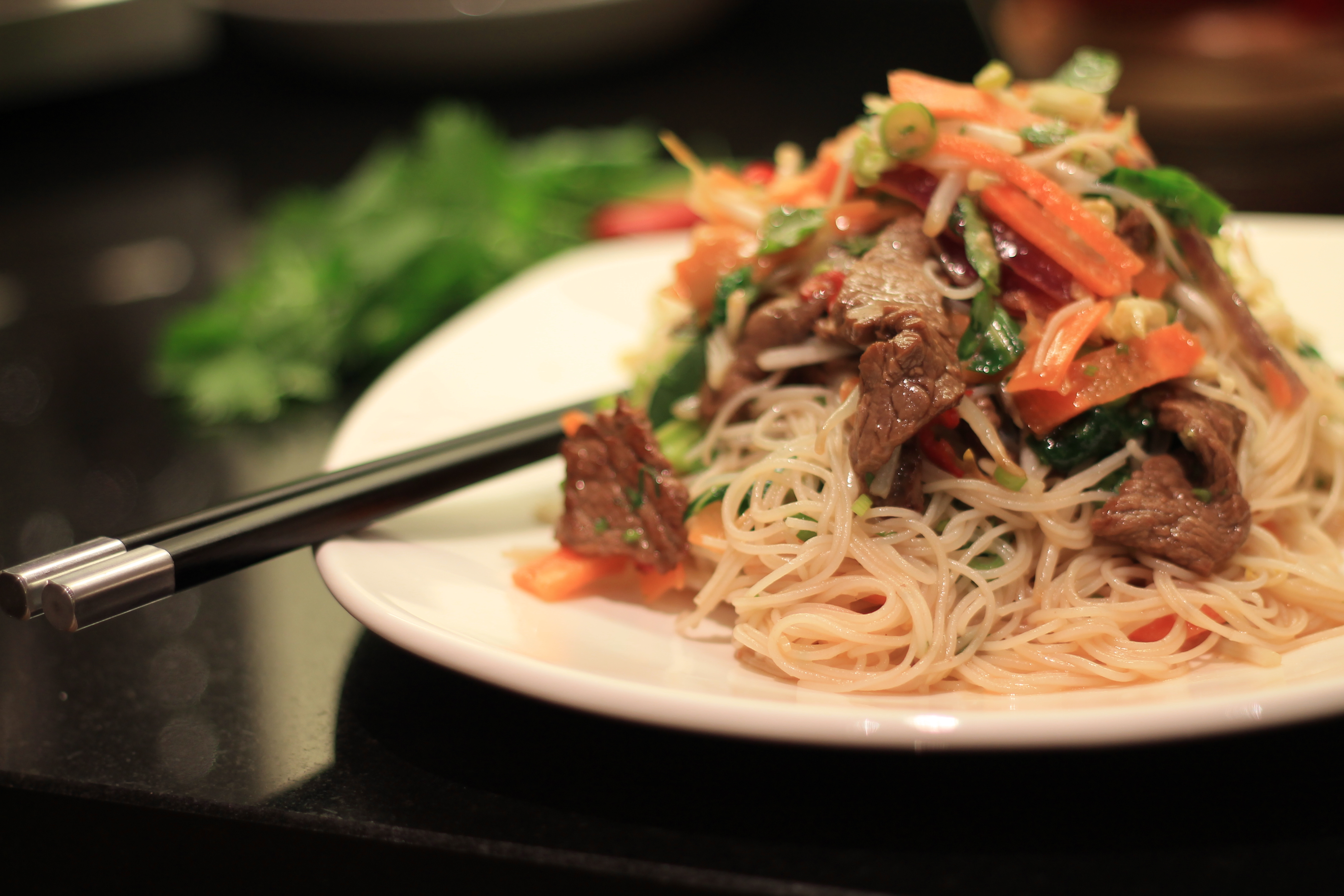
Thai Beef Noodle Salad

Thai Beef Noodle Salad

I think a number of my fellow countrymen and women would admit the British don’t do salads. We’ve adopted other countries of late, sure, but when I grew up salads meant lettuce, quartered (and generally flavourless) tomatoes, some sliced cucumber and spring onion. And that was about it. This dry,  flavourless token gesture of healthiness sat amongst the crisps and sausage rolls at the back of the table at many a get-together, slowly going limp and brown.

It only was much later in life when I first went to Italy and was presented with my first decent salad – a neatly arranged pile of rocket, semi dried tomatoes, parmesan shavings and a dressing, yes a dressing, of olive oil and balsamic vinegar. I had no idea what the ingredients were at the time, but it was delicious. It was as much part of the dish as the piece of steak sat next to it and it changed my view of salad ever since.

I’m probably being a bit deprecating of us Brits, the humble ‘Ploughmans’ is still a great pub lunch and we simply don’t have the climate for the likes of semi-dried tomatoes or olives. As I mentioned though, we are keen to try other cuisines and we can readily get the staples for many different types of salad – Greek, French Spanish and my favourite – Thai

We went to a Thai restaurant recently and Helen went for a salad there. Partly because it’s a nice healthy option and partly because I encouraged her so I could try it. I do that a lot 😉

Thai salad is the ultimate for me. I love Thai flavours anyway, but in a salad they are so much more prominent. I made this salad the other night although the very few who saw my first ever post may notice I did something very similar before….

I used a good steak from a local butchers (sliced thinly, you only need to buy one regular sized cut) and some rice noodles to give it a bit more substance.

I must admit I can’t really remember the dressing quantities, but I tend to add the juice of a whole lime to a bowl and adding and tweaking the rest as I go. I’ve tried to list them, but it’s from recolection.

  • 300g good quality steak, thinly sliced.
  • Half a red onion, thinly sliced
  • 1 garlic clove, finely sliced
  • two handfuls of breansprouts
  • 1 carrot, thinly sliced (I used a potato peeler)
  • About 2 savoy cabbage leaves, very thinly sliced
  • 1/2 a red pepper, thinly sliced
  • 3 small spring onions or 2 larger ones, thinly sliced
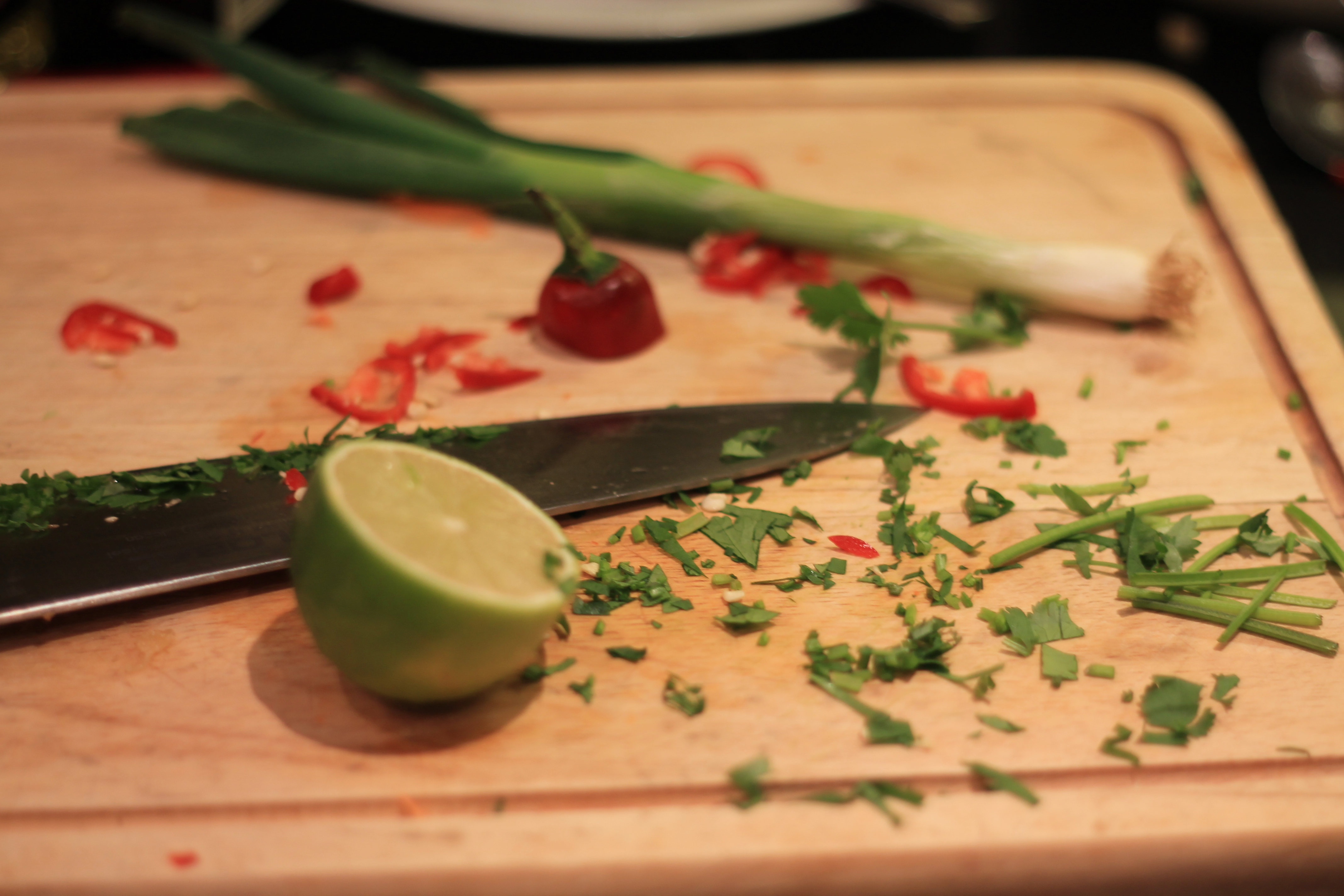
  • 3 tbsp mixture of chopped fresh coriander/basil (thai basil if possible)
  • 100g rice noodles, cooked and cooled.

For the dressing (I think!):

  • Juice of one whole lime
  • 2 tbsp fish sauce
  • 1 tbsp sesame oil
  • 1 tbsp rapeseed or light olive oil (not extra virgin)
  • 2 tsp palm sugar (or brown sugar)
  • 1 red chilli
  • 1 tbsp finely grated ginger
  • A splash of soy sauce to taste.

IMG_6717

Marinade the steak strips in some sesame oil and fish sauce for about 20 minutes.

Make up the noodles as instructed and rinse under the cold tap to cool. Flash fry the beef strips in a fiercely hot pan for a few second to brown and set aside.

Thoroughly wash and prepare the salad vegetables and mix together in a large bowl. Add the beef and resting juices one ready

Mix the dressing together, and taste/adjust as you see fit. Pour over the salad and toss well using tongues or a spaghetti spoon. Can’t get much quicker than that!

Thai Beef Noodle Salad

Salmon with Red Pesto and Tomato Broth

Salmon with Red Pesto and Tomato Broth

It was a busy old weekend, hence the slight lack of attention, or indeed subject matter for Food Frankly, and by busy, I technically mean excessive.

Helen and I headed to a favourite restaurant on Friday for a delicious steak and just a couple of really good beers (well I did, somebody else got driving duties 😉 )Then, Saturday morning, I headed down to Manchester to catch up with old friends and plan a stag do, or bachelor party, depending which side of the pond you live on of course.

After a delicious beef sandwich and pork-pie lunch, we headed off to watch my mate’s mighty Oldham Athletic nick a home win. Then, it was off to watch England take on the French at rugby, in a local pub before heading off on the tram into Manchester for far more beer than we really ought to, or can cope with these days. Dinner comprised fried chicken and pork rinds. Now, I’m no nutritionist, but I’m pretty sure that was not a balanced meal, although I believe there was lettuce involved somewhere in fairness.

The planning wasn’t ‘comprehensive’ it’s fair to say. “Germany somewhere, probably Munich” was the outcome. I think.

And so today was about countering the excess and for dinner I made something light and delicate. Fish is the obvious choice for me and to avoid heavy sauces, I paired it with a quick red pesto and a light basil infused tomato broth. I used salmon simply because I had it, but this would work with a variety of white fish. Crushed new potatoes and steamed purple broccoli finished it off. I pan fried the fish using a non-stick pan to keep the oil and therefore calories down, but I could have grilled it to be even healthier. The broccoli was steamed but left with plenty of ‘bite’. It was all surprisingly good actually and packed with flavour, so much so I think this might be a ‘keeper’.

Serves 2, takes half an hour.

  • 400g salmon fillets (these were skinless)
  • 2 tsp olive oil

For the red pesto:

  • Large handful (50g) of pine nuts
  • 2 garlic cloves
  • Half a jar of sundried tomatoes (about 10 pieces), drained if in oil.
  • Half a red pepper
  • Handful of grated parmesan
  • 1 good lug of quality virgin olive oil
  • Salt and pepper

For the tomato broth:

  • 3 large fresh tomatoes, quartered and de-seeded
  • 1 tbsp olive oil
  • 1 tsp balsamic vinegar
  • 1 garlic clove, sliced
  • 1 pinch of chilli flakes
  • 4 basil leaves, shredded
  • 200ml vegetable stock (I used good vegetable bouillon powder for speed, mixed with boiling water)
  • 10-12 twelve new potatoes, cleaned, skins on
  • 8 pieces of purple broccoli (or regular broccoli if not available)

Make the pesto by simply toasting the pine nuts in a dry pan until browned (but not burnt!) then combining all the ingredients in a food processor. Blitz to a rough paste, taste and season if needed and set aside.

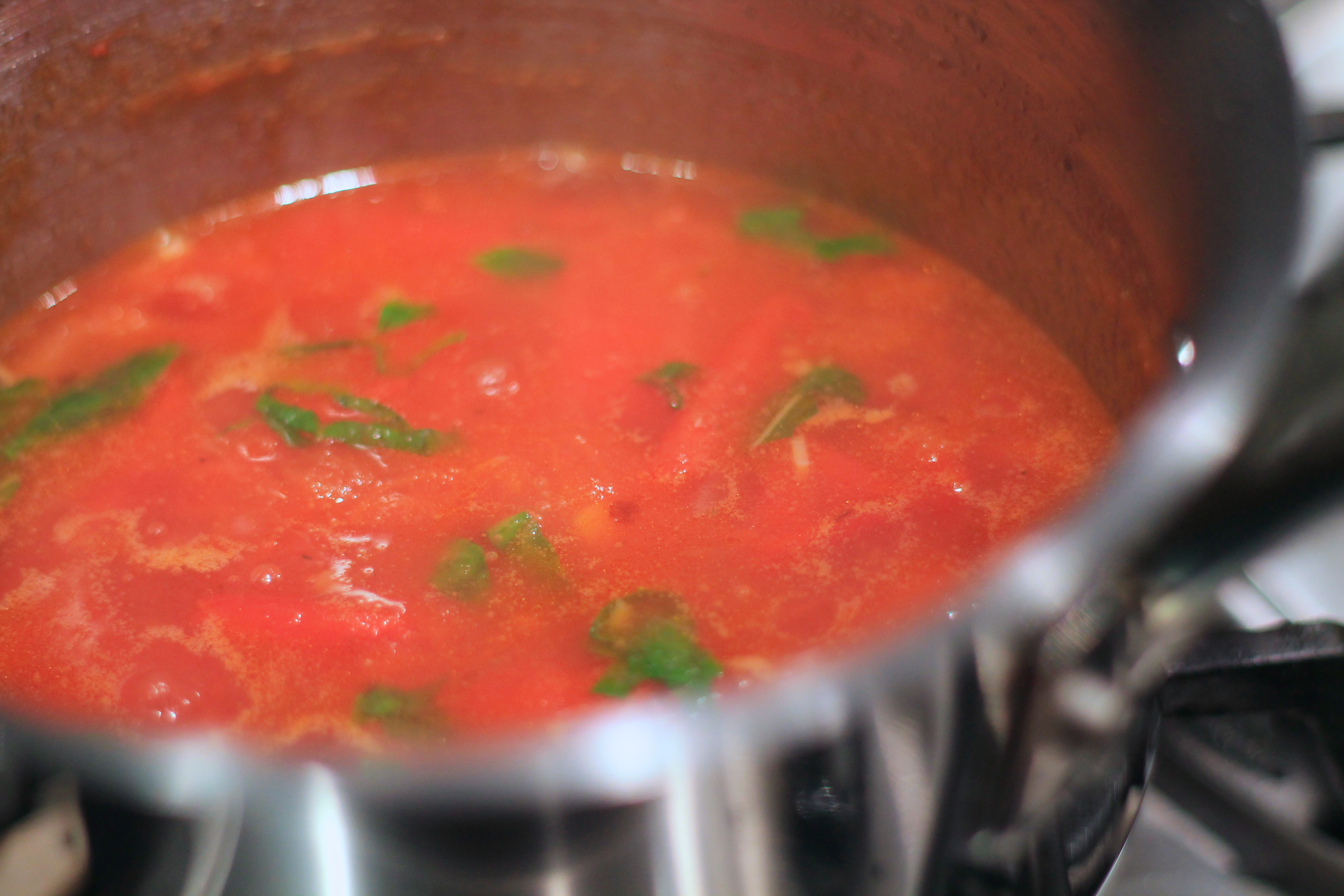
Start the tomato broth by frying the garlic and chilli flakes in the oil. Add the tomatoes and balsamic and fry until the tomatoes give up a bit of juice. When they do, add the stock and leave to very gently simmer. Add the basil towards the end otherwise the flavour will be lost.

Tomato Broth

Whilst doing the broth, in the bottom of a steamer, bring the potatoes to a boil. They take about 15 minutes, so after half that time, add the broccoli in a steamer insert and place above the potatoes.

I started the salmon now too as they were quite thin pieces. I used a non-stick pan to keep the oil to a minimum. Season with a little salt and cook until well browned on a moderate heat – there was no skin on these so I had to be careful not to break them. Set aside in a warm oven once done.

Taste the tomato broth and season if needed. Strain into a warm jug using a fine seive.

Drain the potatoes and crush them roughly and add a pinch of salt if you like. Put them on a very warm plate with the salmon on top. Add the broccoli and pour around the tomato broth. Add about a tablespoon of the red pesto and you’re done!

Salmon with Red Pesto and Tomato Broth

Steamed Open Dumpling Dim Sum

Open Steamed Dumplings
I have tons of cookery books, a cupboard full of everything from £1.99 bargains through  TV chef spin-offs to the bible that is La Gastronomique and I can say that I under-use all of them. I tend browse for the basics and then go…freestyle. With mixed results its fair to say

Now, I make a fair bit of Chinese food during the week as it’s fast, and (providing you watch the oil) healthy. The only problem I have is that I can’t say I’ve nailed a recipe or particular dish in the same way I can make, for instance, specific pasta dishes, they tend to be concoctions of whatever I have in the fridge. This was different though – I got the iPad (other tablets are available…) edition of Ken Hom’s Complete Chinese Cookbook recently and was keen to try his recipes with the ingredients as instructed. Being a big fan of dim sum thought I’d try the relatively straightforward open steamed dumplings. Although the implementation probably wavered a bit, I used the ingredients as Mr Hom instructed and they were delicious.

I bought in the wanton cases as we were in the local Chinese supermarket recently. They keep brilliantly in the freezer but there’s nothing too hard about making them. The recipe quoted about 40, but I in fact made 20 presumably large versions. They didn’t seem so big, so who knows, but it didn’t seem to matter. I served them up with a dipping sauce made from soy sauce, chilli oil, dried chilli flakes, sugar and ginger. I kind of did it off the cuff, so don’t remember the proportions, but it was very much ‘to taste’ anyway!

I made my own mince using some good quality belly pork as Mr Hom specified fatty pork mince. I just blitzed it in the food processor and it worked nicely.

So, via Ken Hom’s Complete Chinese Cookbook:

  • 100g/4oz uncooked prawns
  • 350g/12oz pork belly, minced or food processed (or fatty pre-minced pork)
  • 2 tbsp bacon lardons
  • 100g/4oz water chestnuts, tinned. Well rinsed.
  • 2 tsp ginger, finely chopped
  • 3 tbsp finely chopped spring onion
  • 2 tsp sesame oil
  • 1 tbsp light soy sauce
  • 1 tsp dark soy sauce
  • 1 tbsp dry sherry.
  • 1 egg white
  • 2 tsp sugar
  • 1 tsp salt and a twist of black pepper
  • 20 wanton skin

Defrost the wanton wrappers at room temperature if needed. This takes a surprisingly short amount of time.

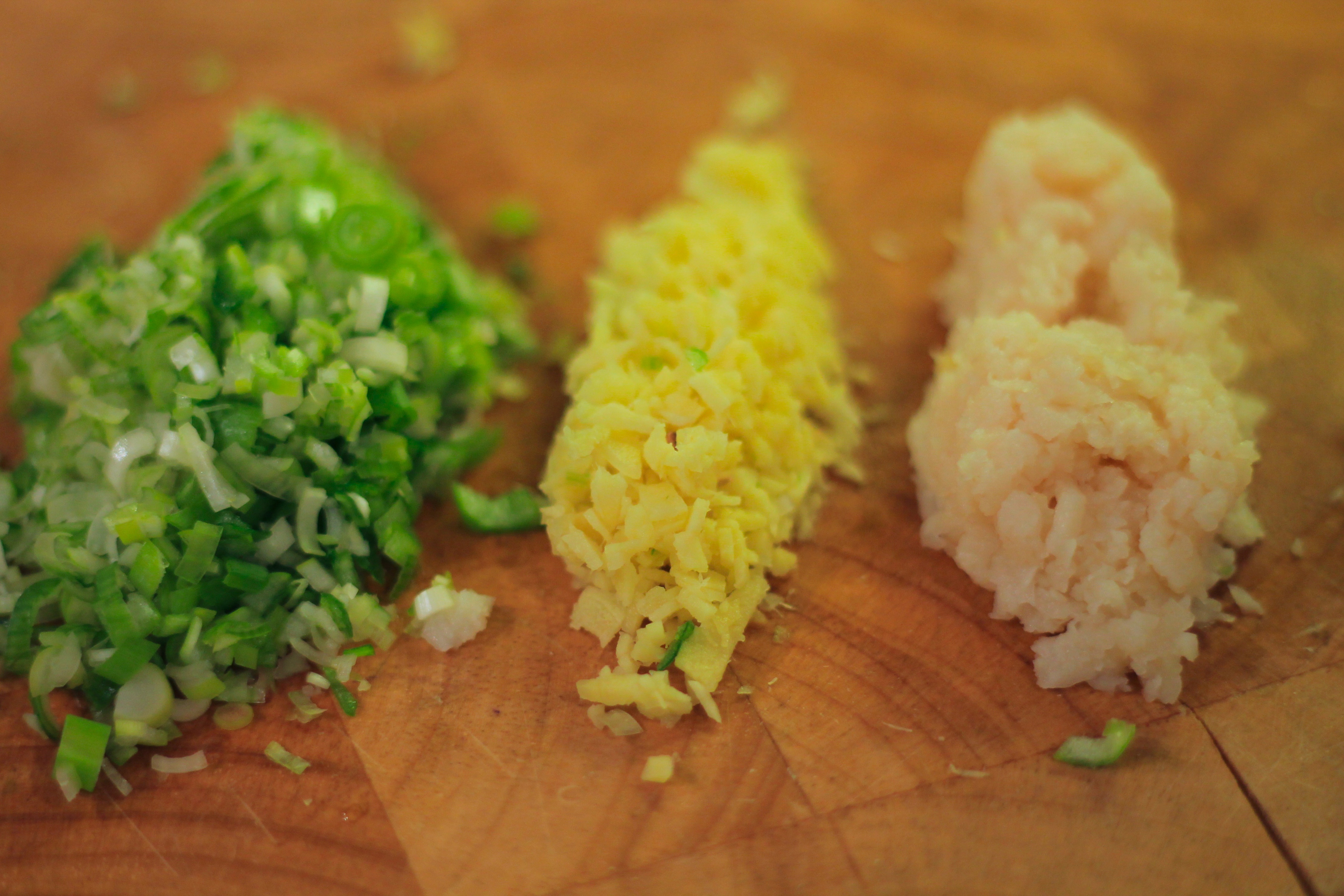
Prepare the pork by mincing or blitzing the pork belly in a processor. Finely chop the prawns and bacon and vegetables.

Open dumplings vegetables

Then, simply place the the whole lot into a bowl and mix very thoroughly.

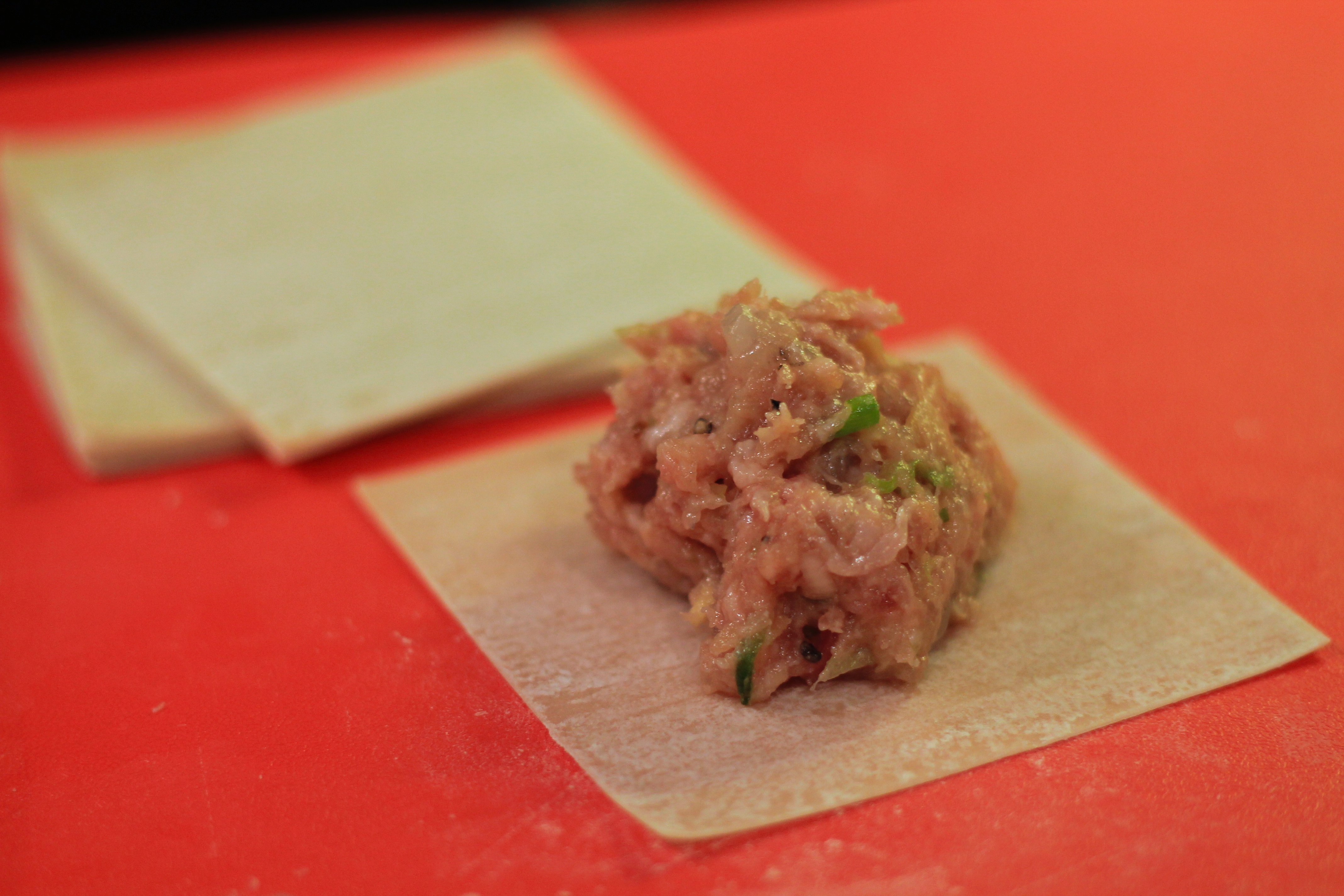
Spoon a couple of teaspoons of the mixture onto the middle of a wanton wrapper.

Dim Sum Preparation

Bring up the sides, pinching firmly and turning as you do to make the open wrapping. Tricky – I’m sure practise makes perfect!

IMG_6480

Boil a little water in the bottom of a steamer. Use the bottom of the steamer insert and cut out some greaseproof paper to line the inside. I used a skewer to push though the holes to let the steam through.

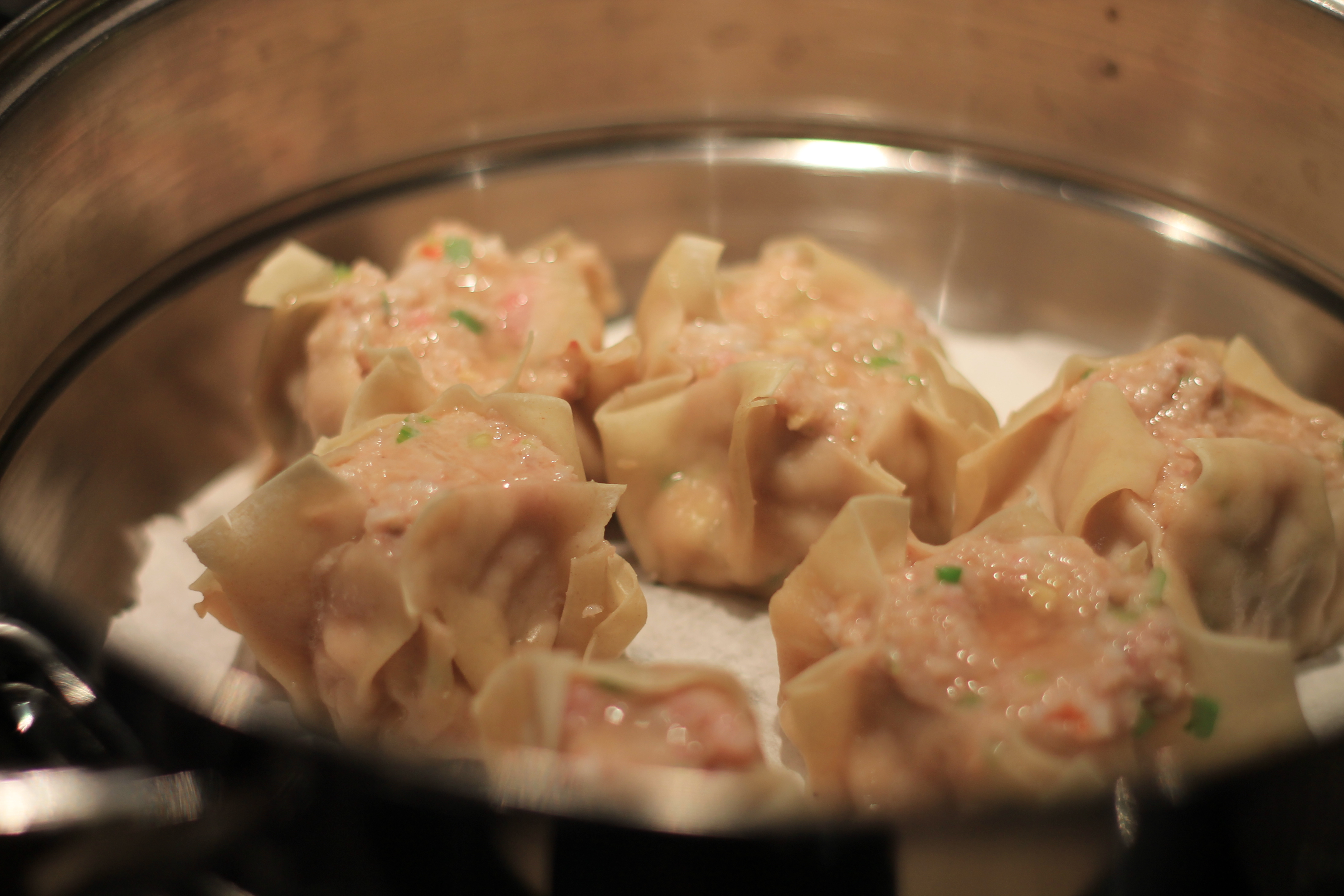
Place the dumplings in, not too tightly packed, and steam for about 15 minutes. I used a probe to check the temperature in the middle and they were well done by this time, but may need longer – the recipe said about 20mins.

Open steamed dumplings in steamer

Repeat in batches until all done!

Slow Cooked Venison and Roast Butternut Squash

IMG_6389

Well the sun was out, the temperatures were bearable and it’s the half term school holidays next week meaning one thing – everybody was out and about. We headed up to Gibside on the fringes of Gateshead for a walk around the ruined Gibside Hall. It’s eerie and spectacular in equal measure, being now little more than an overgrown shell of a once grand house. The chapel and ‘column of liberty’ have fared a little better and still stand a mile apart and in direct view of one another. Hopefully this lends a scale to the size of the estate. We headed up around the far reaches of the estate for the better views and steeper climbs and before we knew it a couple of hours had passed.

IMG_6574

Gibside Chapel

IMG_6617

Ruins of Gibside Hall

Column of Liberty

Column of Liberty

Front of Gibside Hall

Front of Gibside Hall

And so, a moderately lengthy winter walk requires a sturdy dinner. I’ll admit, I’ve put this together based on a couple of dishes I’ve eaten at The Broad Chare, a favourite of mine, mainly for its rustic British food and locally sourced produce. They were actually starters of braised venison with Elsdon cheese on toast and blood pudding with roasted squash and I kind of pulled the two together. Not having Elsdon (a firm goats cheese), I substituted some Wensleydale which has a similar sharp flavour. The venison was diced shoulder, slowly simmered for two hours in wine and beef stock until massively rich. The sweet butternut squash and sharp cheese were perfect companions!

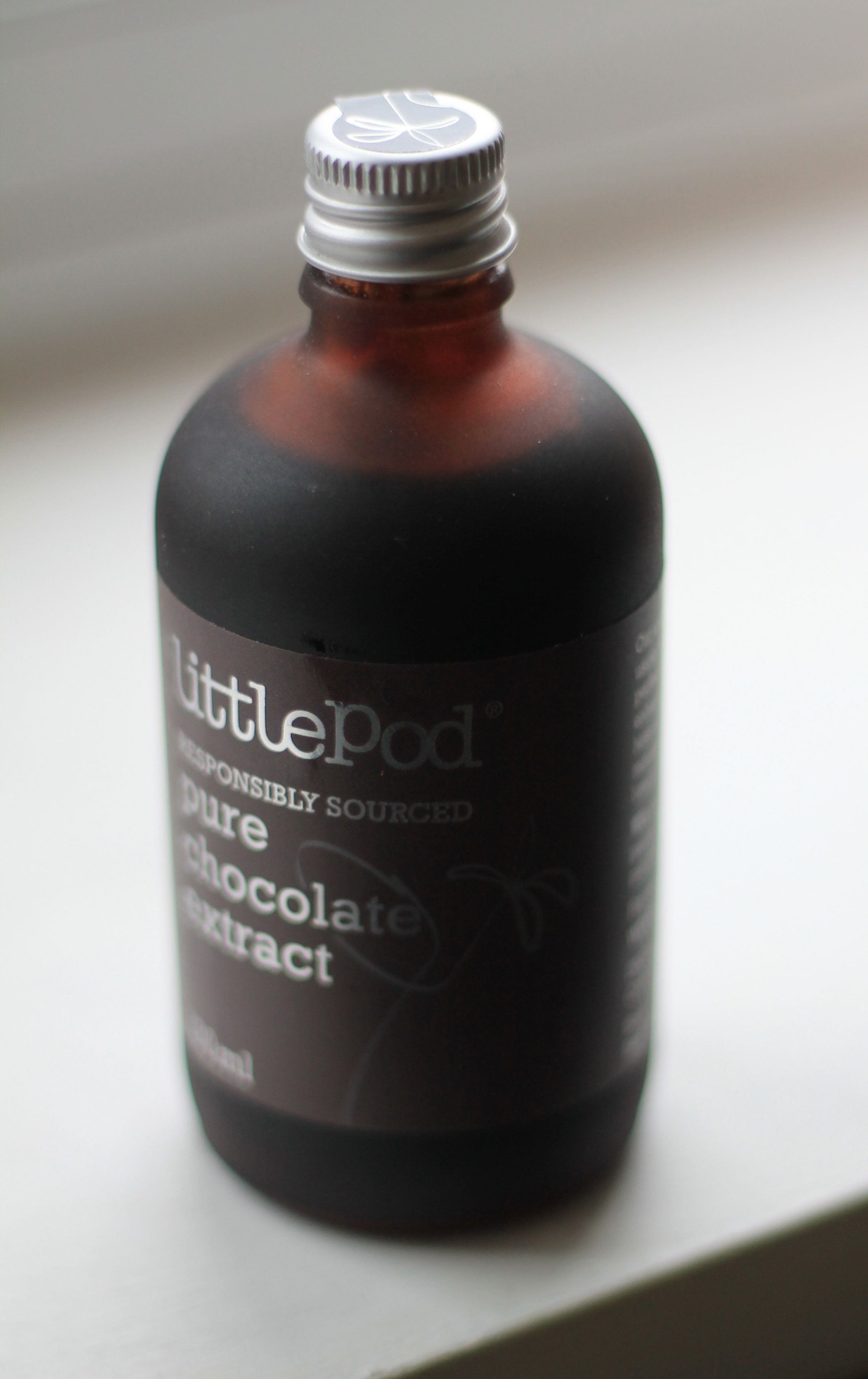
For someting a little different, I tried an ingredient given to me by a friend in a Christmas hamper – some chocolate extract. Chocolate is seemingly unlikely friend of venison and this did lend a nice flavour to the dish overall, without dominating it. I’ll experiment further though….

IMG_6364

Serves 2.

  • 500g diced venison suitable for slow cooking.
  • 2 large glasses of red wine, I used Rioja.
  • 1 tbsp flour
  • 1 garlic clove, 1 carrot, 1 onion and 1 stick of celery finely diced.
  • 1 litre (2 pints) rich beef stock
  • 1 good splash of Worcestershire sauce
  • 2 bay leaves and a large sprig of thyme, leaves only.
  • 70g smoked bacon lardons
  • 1 butternut squash, halved, seeded and cut into chunks
  • Olive oil
  • Salt and Pepper
  • Wensleydale cheese to serve
  • Optional – chocolate extract to taste.

In a heavy casserole dish, heat some oil and fry off the venison and lardons (in batches) until well browned.

Stir in the vegetables and soften them. Return the meat and stir though the flour, adding a little water to make it ‘stick’. Pour in the wine and stock and add the bay leaves. Stir thoroughly.

Put the lid on the pot and simmer on the lowest possible heat for about two hours.

After an hour, place the prepared butternut squash in a tray, season with salt and drizzle with oil. Roast in a moderate oven for about an 45 minutes to 1 hour until very tender.

For the last half and hour of the vension, remove the lid to reduce and concentrate the liquid and for the last 5 minutes, add the thyme leaves. Add the chocolate extract to taste if using at the end – it’s worth a try.

Serve the dish up with shavings of Wensleydale cheese and a large glass of Rioja. Perfect.

Venison and Butternut Squash

In the face of recent food supply chain “issues”, maybe this is the answer!

Food and Forage Hebrides's avatarFood and Forage Hebrides

This is a post part of which has been sitting in my drafts for some time and for some reason, I only now get round to publication.  This is not least with encouragement of Phil at Food, Frankly and my promise to do so last week. Being a person of my word (most of the time), here is the second volume of the rather graphic venison butchery episode.  Be assured that this is somewhat more gentle than Volume 1: In the Flesh and covers making the most of the animal and preparing fine game stock and venison sausages.

Part of the reason I have not posted this so far is that I am not really a very good step-by-step recipe blogger, especially with images as I lack patience and photographic skills for this, and the processes involved very much need this approach.  However, if going off on random digressions are…

View original post 1,721 more words

Pancakes two ways – savoury and sweet.

IMG_6411 There was a time long ago, when we had to go to the phone to use it, wireless meant ‘a radio’, Betamax was on the way out and Bluetooth would have presumably meant a trip to the dentist, when I used to eat “Crispy Pankcakes”.

I presume it was a UK thing, but they were basically folded and breaded pancakes that when cooked, by whatever means you choose, disguised a variety of fillings the temperature of molten magma. Now these weren’t haute cuisine by any stretch of the imagination, think savoury pop tarts, only hotter, but as a child I seemed to remember quite liking these things.

Today is Shrove Tuesday or Pancake Day of course, so this and the fact Findus (the original makers) has featured heavily in the news of late, lead me to the natural conclusion that I had to replicate these little pockets of lava.

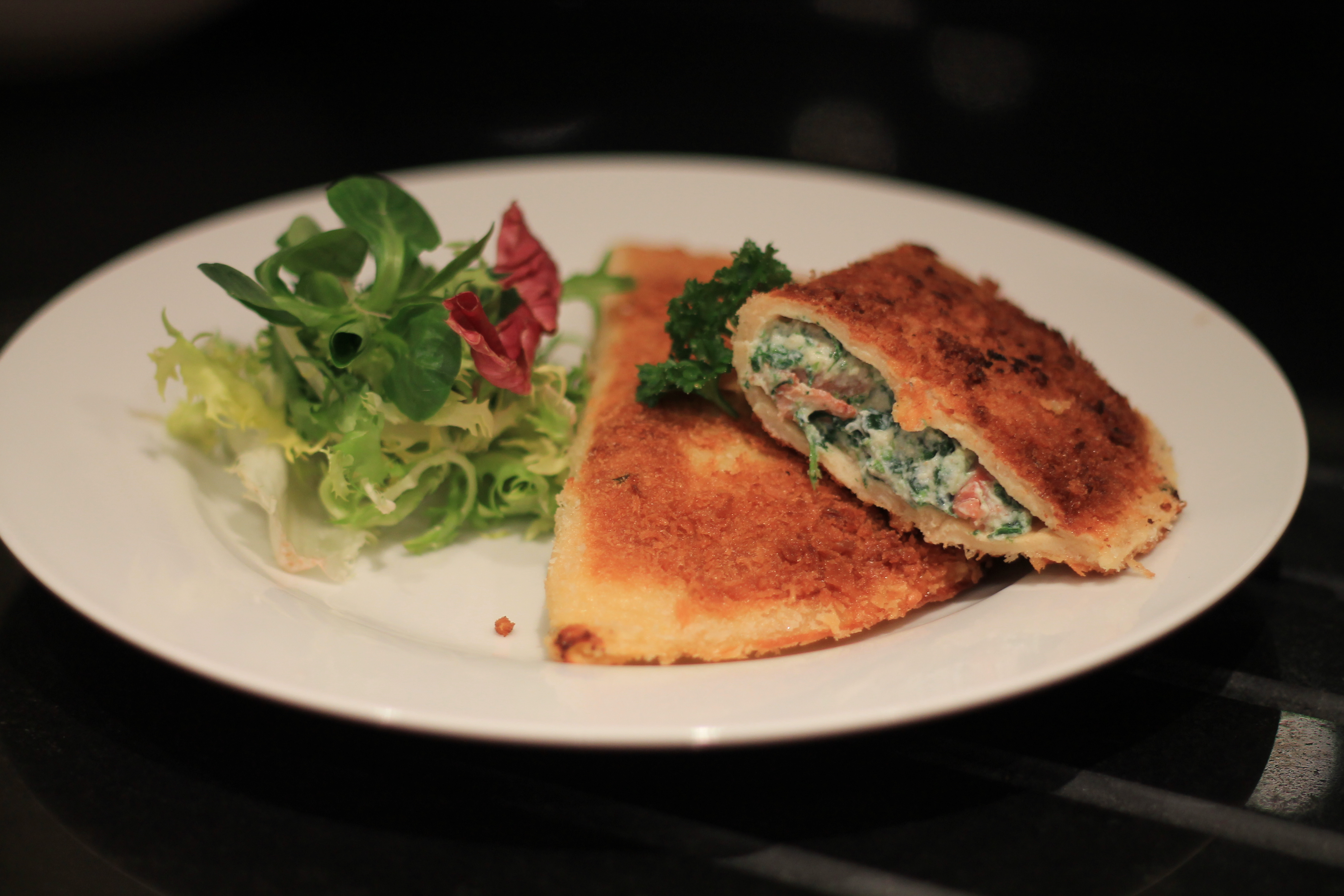
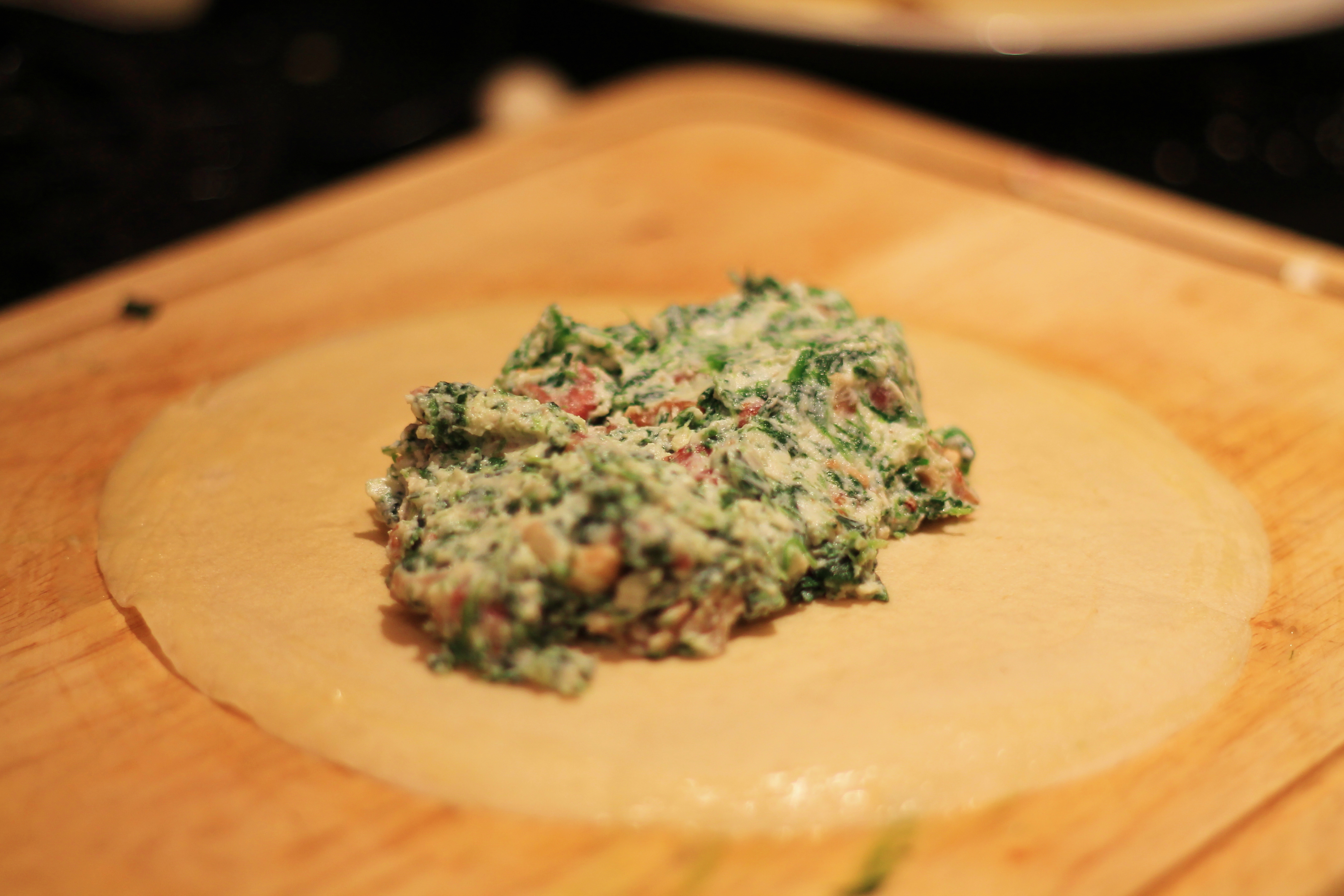
I was late home tonight so I swung by the store on the way back and picked out ingredients for the filling I thought would be quickest to be frank. Spinach, ricotta, bacon and mushroom seemed to fit that profile and is invariably good. And so it was on…

These turned out a little bigger than I remember so I ended up making 4 and freezing two. If I could have gotten them, porcini mushrooms would have had much more flavour, but I couldn’t.

I had to make a sweet one too, I had my orders, and I went for chocolate sauce, banana and flaked almonds. This was a little easier!

For the pancakes:

  • 200g flour
  • 2 eggs
  • 350ml semi-skimmed milk
  • pinch salt

For the filling:

  • 4 handfuls of spinach
  • 250g ricotta cheese
  • 90g smoked bacon lardon
  • 4 medium mushrooms sliced thinly
  • A little salt and chilli flakes
  • Oil
  • Garlic, finely chopped

To finish:

  • 1 egg beaten
  • 1 tsp of flour
  • panko breadcrumbs (or regular ones will do fine)
  • Oil

For the sweet version:

  • 2 pancakes (as above)
  • About 200ml chocolate sauce (I bought it in)
  • 1 ripe banana, mashed
  • 2 handfuls of almonds to serve

To make the pancakes, simply mix the ingredients in a bowl, adding the liquids to the flour and whisking as you do to avoid lumps. Stir in a good pinch of salt

In a small pan, fry the pancakes in a little oil so as they are thin and about 23cm/9 inches across. Once done, leave to go cool, they will need to be.

To make the filling, blanch the spinach in a little water until wilted. Drain, cool and squeeze out as much water as you can.

Whilst cooling, fry the bacon in a little oil, the chilli flakes and garlic with the sliced mushrooms until any water released has dried up. Set aside to cool.

Chop the spinach and mix into the ricotta. Once the bacon/mushroom mixture is cooled, at that too. Taste and season if needed.

To make the pancakes, first beat an egg in a bowl decant half to a ramekin and mix with a tsp of flour to make a ‘glue’. Spoon about two tbsp of filling onto the middle of a pancake and brush the edge all the way round with the egg/flour glue. Fold it over carefully trying to expel any trapped air.

Crispy pancake filling

Brush it with the plain egg and coat well in the breadcrumbs all over.

Fry gently in a little oil on both sides and repeat with the others!

Crispy pancake frying

For the sweet pancakes, I simply heated the chocolate sauce with a mashed ripe banana. Spread on the warm pancake (I reheated it in a fresh pan but the microwave will so) and roll up, dust with coco powder and the flaked almonds.

Pancake with chocolate sauce, banana and almonds